Panth Softech Team
Today, most businesses depend on software systems to run their operations. Companies build customer portals, SaaS platforms, dashboards, and internal tools that serve thousands or even millions of users. Because of this, choosing the right backend technology is very important for CTOs and technology leaders.
In recent years, Node.js for enterprise applications has become a popular choice for modern software development. It is fast, flexible, and works well with cloud platforms. With the release of Node.js 25, the platform has become even stronger for enterprise systems.
In this guide, Panth Softech explains what CTOs should know about Node.js 25 for enterprise apps, its features, scalability benefits, architecture advantages, and how it compares with other backend technologies.
Understanding Node.js in Enterprise Development
Node.js is a popular enterprise JavaScript runtime. It allows developers to run JavaScript on the server side.
In the past, JavaScript was only used inside web browsers. Node.js changed that. Now developers can use JavaScript to build both frontend and backend applications.
This gives companies a big advantage. Developers can use one programming language across the entire project. This makes development easier and faster.
Another key benefit is the event driven architecture with Node.js. Traditional servers process one request at a time. Node.js works differently. It can handle many requests at the same time without slowing down.
Because of this, Node.js is very useful for scalable enterprise backend systems that serve large numbers of users.
Why Enterprises Are Choosing Node.js
Many companies are choosing Node.js enterprise development because it solves common problems in modern software systems.
One major reason is speed. Developers can build and release applications faster because JavaScript is used everywhere in the project.
Node.js is also great for Node.js high performance applications. It can manage thousands of connections at the same time without blocking the system.
Another benefit is flexibility. Node.js easily connects with databases, APIs, and cloud platforms. This helps companies build modern applications faster.
Because of these advantages, many global companies now use Node.js for enterprise software.
Node.js 25 Features That Matter for Enterprises
The release of Node.js 25 features brings several improvements that help companies build better applications.
Improved Performance
Performance is very important for enterprise applications. Slow systems can affect users and business operations.
Node.js 25 includes improvements that make applications run faster. The system processes requests more efficiently and uses resources better.
For companies building Node.js large scale application development platforms, this means applications stay stable even during heavy traffic.
Better performance also means businesses may need fewer servers, which helps reduce infrastructure costs.
Stronger Security Improvements
Security is very important in Node.js enterprise development. Enterprise applications often store important company data and customer information.
Node.js 25 includes updates that improve security. These updates strengthen encryption and improve dependency management.
These improvements help protect applications from modern cyber threats.
For businesses that handle sensitive data, this makes Node.js a safer choice.
Better Support for Cloud Applications
Most modern enterprise systems run on cloud platforms. Node.js already works well in cloud environments.
With Node.js 25, support for Node.js cloud applications is even better.
The platform works smoothly with container systems and serverless environments. This allows applications to scale automatically when traffic increases.
This flexibility helps companies handle changing workloads without system failures.
Improved API Development
APIs play a very important role in enterprise systems. They allow different services and applications to communicate with each other.
Node.js is widely used for Node.js API development. With Node.js 25, developers can build APIs faster and more easily.
Common types of APIs built with Node.js include:
- REST APIs
- GraphQL APIs
- Microservice APIs
- Integration APIs
These APIs allow different systems to share data and work together smoothly.
For companies building Node.js enterprise integration systems, this is very helpful.
Node.js Enterprise Scalability
Scalability is one of the biggest advantages of Node.js. Enterprise applications must handle growing traffic as businesses expand.
Node.js supports Node.js enterprise scalability because it can process many requests at the same time.
Applications can also scale easily by adding more servers or containers.
This makes Node.js a strong choice for platforms such as:
- SaaS platforms
- Online marketplaces
- Financial systems
- Enterprise dashboards
- Collaboration tools
With the right setup, Node.js applications can support millions of users.
Node.js Microservices Architecture
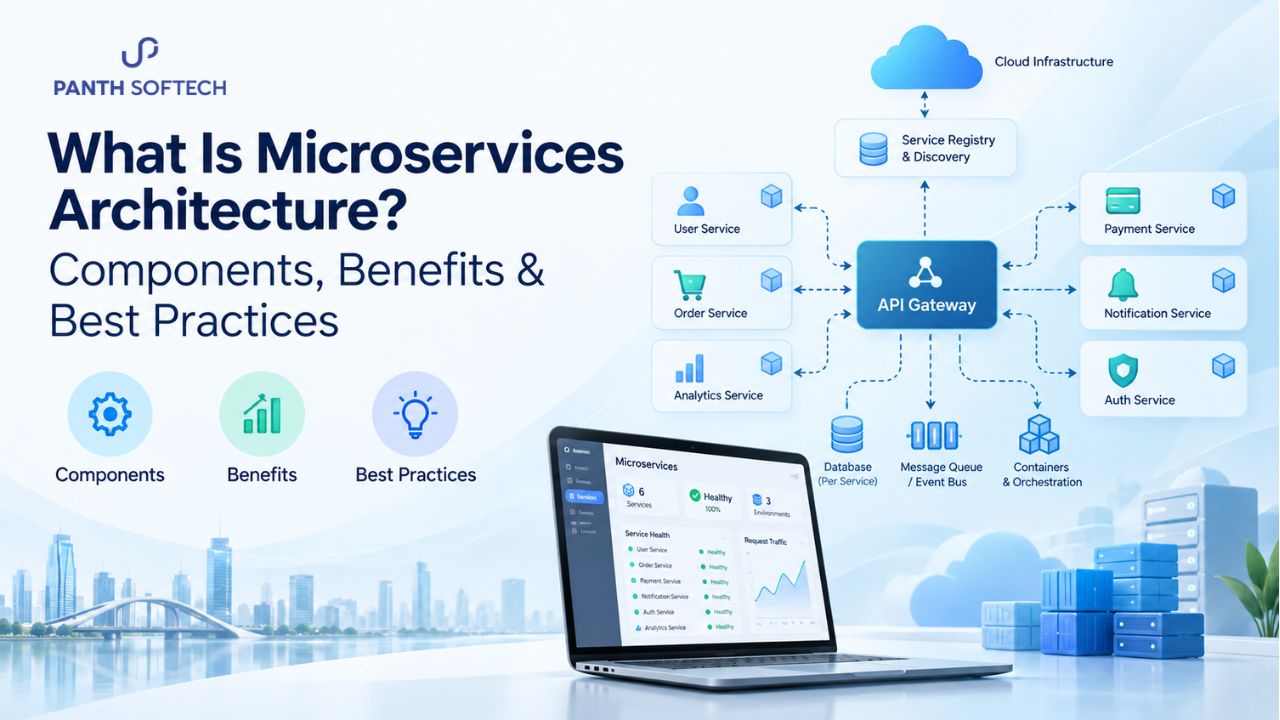
Many companies are moving away from large monolithic systems. Instead, they are using Node.js microservices architecture.
In this approach, applications are divided into smaller services. Each service performs a specific task.
These services communicate with each other through APIs.
Node.js is well suited for this architecture because it is lightweight and fast. Developers can create and deploy services quickly.
This also makes the system easier to update and maintain.
Node.js for Enterprise Integration
Enterprise systems often need to connect many different business tools. These tools may include CRM software, ERP systems, payment platforms, and internal databases.
Node.js supports strong Node.js enterprise integration capabilities.
Using APIs and middleware tools, companies can connect different systems and automate business processes.
For example, businesses can connect:
- Customer management systems
- Payment gateways
- Inventory systems
- Data analytics tools
This ability to connect systems makes Node.js useful for Node.js enterprise solutions.
Node.js 25 vs Other Enterprise Backend Technologies
When CTOs choose backend technologies, they usually compare different platforms such as Java, Python, and .NET.
Each platform has its strengths. The table below shows a simple comparison.
| Technology | Best For | Performance | Scalability | Development Speed |
| Node.js 25 | APIs, microservices, real-time apps | Very High | Excellent | Very Fast |
| Java | Large enterprise systems | High | Excellent | Moderate |
| Python | Data and AI applications | Moderate | Good | Fast |
| .NET | Microsoft enterprise platforms | High | Very Good | Moderate |
Node.js vs Java
Java has been used in enterprise systems for many years. It is stable and reliable.
However, Node.js allows faster development and works well for modern cloud applications.
It is also very good for real-time platforms and microservices systems.
Node.js vs Python
Python is popular for machine learning and data science.
But for high-traffic applications, Node.js usually performs better. Its asynchronous system handles many requests at the same time.
This makes Node.js suitable for real-time web applications.
Node.js vs .NET
.NET is often used by companies that depend on Microsoft technologies.
Node.js offers more flexibility and faster development speed. It also has a very large open-source ecosystem.
Because of this, many modern cloud platforms prefer Node.js.
Enterprise Use Cases for Node.js
Node.js works best for applications that require speed and real-time communication.
Many companies use Node.js to build SaaS platforms, customer portals, and enterprise dashboards.
It is also widely used in fintech platforms that process many transactions.
Businesses building Node.js backend development for enterprises often rely on Node.js for API-based systems where different services communicate with each other.
Challenges CTOs Should Consider
Although Node.js has many benefits, CTOs should also be aware of a few challenges.
Node.js works best for applications that handle many input and output operations. Heavy CPU tasks may require additional services or optimization.
Another challenge is managing dependencies. Since Node.js has many open-source libraries, companies must monitor their packages carefully.
Working with experienced developers helps ensure the right Node.js enterprise architecture is used.
How Panth Softech Helps Enterprises Build Node.js Solutions
Building enterprise applications requires strong technical knowledge and good planning. Panth Softech helps companies develop scalable Node.js enterprise solutions.
The team focuses on creating reliable backend systems, scalable APIs, and modern microservices architectures.
With expertise in Node.js server side development, cloud infrastructure, and enterprise integrations, Panth Softech helps businesses build applications that grow with their needs.
The Future of Node.js in Enterprise Development
Node.js continues to improve with every new release. With Node.js 25 for enterprise apps, the platform is becoming more powerful for enterprise systems.
Future software will depend more on cloud platforms, distributed systems, and real-time data.
Node.js is well prepared to support these technologies and remain an important platform for modern backend development for enterprises.
Conclusion
Node.js has become one of the most trusted technologies for Node.js enterprise applications. Its event-driven design, scalability, and flexibility make it ideal for modern systems.
With the latest Node.js 25 features, businesses can build faster, more secure, and scalable applications. From Node.js microservices architecture to Node.js API development, Node.js supports many enterprise needs.
For CTOs planning long-term technology strategies, Node.js 25 provides a strong foundation for future enterprise software.
By working with experienced teams like Panth Softech, companies can use Node.js to build powerful applications that support long-term growth.
FAQs About Node.js 25 for Enterprise Apps
1. How can businesses determine whether Node.js 25 is the right fit for their application architecture?
Businesses should evaluate application traffic, real-time processing needs, API workload, microservices strategy, and cloud deployment plans. Node.js 25 is a strong choice for event-driven and I/O-intensive applications, but an architecture assessment helps confirm whether it aligns with long-term business and technical goals.
2. What risks should enterprises assess before upgrading to Node.js 25?
Before upgrading, organizations should review third-party package compatibility, breaking changes, testing coverage, deployment pipelines, and rollback strategies. Conducting a staged upgrade and performance testing helps reduce migration risks while ensuring business-critical applications continue running without disruption.
3. How does Node.js 25 support modern cloud-native application development?
Node.js 25 is designed to work well with containers, Kubernetes, serverless platforms, and microservices architectures. Its asynchronous processing model enables efficient resource utilization, making it suitable for scalable cloud-native applications that require fast response times and high availability.
4. What performance metrics should businesses monitor after upgrading to Node.js 25?
Organizations should monitor API response time, memory usage, CPU utilization, application latency, error rates, concurrent request handling, and overall system stability. Tracking these metrics helps ensure the upgrade delivers measurable improvements without affecting the user experience.
5. How does Panth Softech help businesses modernize enterprise applications with Node.js?
Panth Softech provides application assessment, backend modernization, API development, cloud migration, performance optimization, and DevOps integration. The team ensures Node.js applications are secure, scalable, and optimized for enterprise workloads while supporting future business growth.
6. What qualities should companies look for in a Node.js development partner?
Look for expertise in enterprise architecture, RESTful APIs, cloud platforms, CI/CD, security, database optimization, and microservices. An experienced development partner should also offer transparent project management, code quality assurance, and long-term maintenance to support evolving business requirements.
7. Why do software companies and enterprises choose Panth Softech for Node.js development?
Panth Softech delivers customized Node.js solutions backed by experienced engineers, agile development practices, and cloud expertise. The company focuses on building maintainable, high-performance applications that integrate seamlessly with enterprise systems and scale alongside business growth.