Panth Softech Team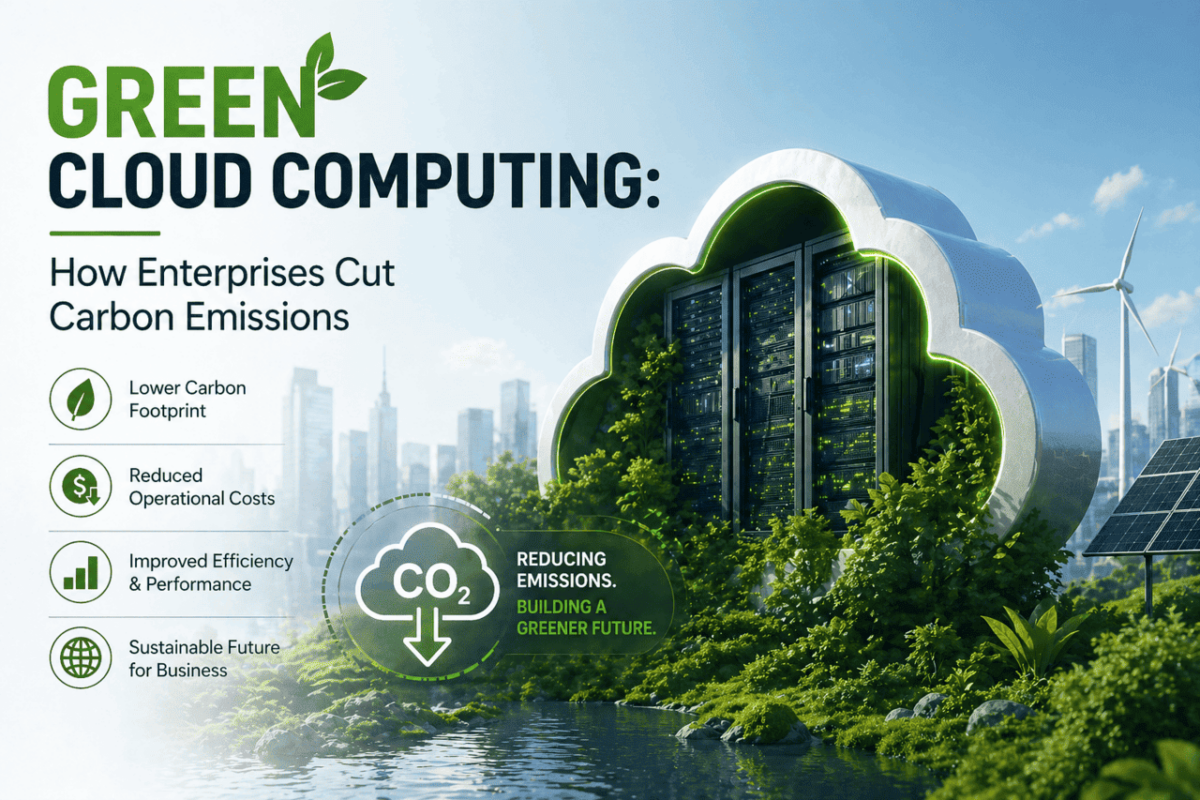
Businesses today are under pressure to grow fast while also reducing their environmental impact. One of the biggest hidden causes of pollution is IT infrastructure. Old data centers are a major part of this problem. They use a lot of energy. This is where green cloud computing comes in.
Green cloud computing is not just a trend. It is becoming a core part of how modern enterprises operate sustainably. Companies are now shifting toward sustainable cloud computing to reduce energy use, lower costs, and cut down their carbon footprint.
In this guide, you’ll learn how cloud technology helps reduce emissions, why it matters, and how your business can adopt eco-friendly cloud solutions effectively.
What is Green Cloud Computing?
Green cloud computing means using cloud services in a way that reduces harm to the environment. It focuses on using fewer resources, saving energy, and reducing waste. These green IT solutions for enterprises are designed to make technology more efficient and eco-friendly.
Instead of running servers all the time, cloud systems allow businesses to use resources only when needed. This reduces energy waste and improves efficiency. That’s one of the main reasons how cloud computing reduces emissions is becoming an important topic for modern businesses.
The Environmental Impact of Cloud Computing
Cloud computing is powerful, but it still affects the environment. The biggest issue is the environmental impact of cloud computing, especially from data centers.
Data centers are large facilities that store and process data. They need a lot of electricity to run servers and cooling systems.
Here are the main concerns:
1. High Energy Use
Servers, cooling systems, and networking equipment require continuous power, leading to increased cloud computing carbon emissions.
2. Carbon Emissions
Traditional data centers rely heavily on fossil fuels, contributing to higher emissions.
3. E-Waste Generation
Frequent hardware upgrades result in electronic waste, which can harm the environment if not managed properly.
4. Cooling Requirements
Maintaining optimal temperatures in data centers consumes additional energy, increasing overall carbon output.
The good news is that modern energy-efficient data centers are solving many of these problems.
How Cloud Computing Reduces Emissions
Cloud computing can actually help reduce pollution when used properly.
Here’s how cloud computing reduces emissions:
1. Resource Optimization
Cloud platforms use virtualization to run multiple workloads on a single server, reducing the need for physical hardware.
2. On-Demand Scaling
Businesses can scale resources up or down based on demand, avoiding unnecessary energy usage.
3. Shared Infrastructure
Cloud providers serve multiple clients using shared infrastructure, improving overall efficiency.
4. Advanced Cooling Techniques
Modern cloud providers use AI-driven cooling systems and innovative designs to reduce energy consumption.
5. Renewable Energy Integration
Leading providers invest heavily in renewable energy in cloud computing, such as solar and wind power.
All these factors help businesses reduce their carbon footprint with cloud solutions.
Key Features of Sustainable Cloud Computing
To build a strong sustainable cloud computing setup, businesses should focus on these key features:
Energy-Efficient Data Centers
Modern energy-efficient data centers are designed to use less power.
They use:
- Smart cooling systems
- Better airflow design
- AI-based energy control
- Efficient hardware
These improvements reduce energy use and emissions.
Carbon Neutral Cloud Services
Some providers offer carbon-neutral cloud services, where they balance their emissions by using clean energy or carbon offset programs. This means your business can operate without adding extra pollution.
Low Carbon Cloud Infrastructure
A low-carbon cloud infrastructure uses clean energy and efficient systems to reduce environmental impact. It focuses on doing more work with less energy.
Automation and AI Optimization
Automation helps reduce waste by managing resources better. This is an important part of cloud sustainability strategies.
Benefits of Green Cloud Computing for Enterprises
Using green cloud computing is not just good for the environment—it also helps your business.
1. Reduced Operational Costs
Efficient resource usage lowers energy bills and infrastructure costs.
2. Improved Brand Reputation
Sustainability is becoming a key differentiator. Businesses adopting eco-friendly cloud solutions are viewed more positively by customers and stakeholders.
3. Regulatory Compliance
Governments are introducing stricter environmental regulations. Green cloud strategies help businesses stay compliant.
4. Scalability with Sustainability
Enterprises can grow without increasing their carbon footprint significantly.
5. Long-Term Efficiency
Sustainable systems are often more efficient, reliable, and future-proof.
Cloud Sustainability Strategies for Enterprises
To get the best results from enterprise sustainability with cloud technology, businesses should follow smart strategies.
1. Choose the Right Cloud Provider
Pick providers that:
- Use renewable energy
- Offer carbon-neutral services
- Share sustainability reports
This helps build a strong, low-carbon cloud infrastructure.
2. Optimize Your Usage
Make sure you are not wasting resources.
- Turn off unused systems
- Use auto-scaling
- Plan usage properly
This helps reduce the carbon footprint with clouds.
3. Use Serverless Technology
Serverless computing runs only when needed, saving energy.
4. Manage Data Smartly
Reduce unnecessary data storage.
- Delete unused files
- Compress data
- Use smart storage options
5. Track Your Emissions
Use tools to measure cloud computing carbon emissions and improve performance.
6. Follow Green Development Practices
Build apps that use fewer resources.
- Write efficient code
- Reduce heavy processes
- Optimize performance
Role of Renewable Energy in Cloud Computing
A major part of sustainable cloud computing is clean energy.
Many cloud providers are investing in:
- Solar energy
- Wind energy
- Hydropower
Using renewable energy in cloud computing reduces pollution and supports sustainability.
Real-World Example: Enterprise Transformation
Let’s look at a simple example. A company was running its own data center.
Problems:
- High electricity bills
- Wasted resources
- High carbon emissions
After moving to a cloud provider with energy-efficient data centers, they achieved:
- 40% less energy use
- 30% cost savings
- Lower emissions
This shows how enterprise sustainability with cloud technology can benefit both business and the environment.
Challenges in Implementing Green Cloud Computing
There are some challenges when adopting green cloud computing:
1. Migration Complexity
Moving legacy systems to the cloud requires planning and expertise.
2. Cost of Transition
Initial investment may be required for migration and optimization.
3. Lack of Awareness
Many businesses are still unaware of green IT solutions for enterprises.
4. Vendor Selection
Choosing the right cloud provider is critical for sustainability success.
Even with these challenges, the long-term benefits are worth it.
Future of Eco-Friendly Cloud Solutions
The future of eco-friendly cloud solutions looks promising.
New trends include:
- AI-based energy optimization
- Carbon tracking systems
- Edge computing
- More renewable energy use
- Sustainable hardware
Soon, carbon-neutral cloud services will become standard.
Why Enterprises Must Adopt Green Cloud Computing Today
Sustainability is no longer optional—it’s a business imperative. Customers, investors, and regulators are increasingly demanding environmentally responsible practices. Companies that delay adopting green cloud computing risk falling behind.
By using green cloud computing, companies can:
- Reduce environmental impact
- Save money
- Improve brand value
- Stay ahead of competitors
How Panth Softech Helps You Build a Green Cloud Strategy
At Panth Softech, we help businesses move toward sustainable cloud computing simply and effectively.
We support you in:
- Building low-carbon cloud infrastructure
- Creating smart cloud sustainability strategies
- Reducing cloud computing carbon emissions
- Moving to energy-efficient data centers
- Adopting eco-friendly cloud solutions
Our goal is to help you grow your business while protecting the environment.
Final Thoughts
Green cloud computing is reshaping how businesses think about technology and sustainability. It offers a powerful way to reduce emissions while improving efficiency and scalability.
From renewable energy in cloud computing to carbon-neutral cloud services, the shift toward sustainability is accelerating—and enterprises that embrace it early will gain a significant competitive advantage.
If your goal is to reduce your carbon footprint with the cloud, now is the time to act.
With the right strategy and a partner like Panth Softech, you can build a future-ready, sustainable, and high-performing cloud ecosystem that benefits both your business and the planet.
FAQs About Green Cloud Computing and Carbon Emissions
1. How can enterprises identify whether their current cloud infrastructure is energy efficient?
Enterprises should assess server utilization, workload distribution, idle resources, energy consumption, and cloud monitoring reports. A cloud infrastructure audit helps identify underutilized resources and optimization opportunities, enabling businesses to reduce unnecessary energy usage, improve system performance, and support long-term sustainability initiatives.
2. What cloud optimization strategies have the biggest impact on reducing carbon emissions?
Businesses can reduce emissions by rightsizing virtual machines, automating workload scheduling, eliminating unused cloud resources, adopting serverless computing, and using energy-efficient data centers. These strategies improve infrastructure performance while lowering operational costs and minimizing the environmental impact of cloud operations.
3. Can Green Cloud Computing support both sustainability goals and business growth?
Yes. Green Cloud Computing helps organizations lower energy consumption and operational expenses while providing scalable infrastructure for future growth. It enables businesses to expand applications, support remote teams, and process larger workloads without significantly increasing their environmental footprint.
4. What challenges should companies prepare for during a green cloud transformation?
Common challenges include migrating legacy applications, managing cloud costs, ensuring regulatory compliance, maintaining security, and minimizing downtime. Working with an experienced cloud technology partner helps organizations develop a phased migration strategy that reduces risks and ensures a smoother transition.
5. How does Panth Softech help enterprises build sustainable cloud environments?
Panth Softech provides cloud consulting, migration, infrastructure optimization, and application modernization services tailored to business goals. The team evaluates existing environments, recommends energy-efficient cloud architectures, and implements scalable solutions that improve operational efficiency while supporting enterprise sustainability initiatives.
6. What should businesses look for when selecting a Green Cloud Computing partner?
Choose a partner with expertise in cloud migration, infrastructure optimization, cybersecurity, automation, DevOps, and scalable architecture. They should also provide performance monitoring, ongoing support, and strategies that align cloud adoption with both business objectives and environmental sustainability goals.
7. How can enterprises measure the ROI of green cloud computing projects?
ROI can be measured through reduced energy consumption, lower infrastructure costs, improved server utilization, decreased maintenance expenses, faster application performance, reduced downtime, and lower carbon emissions. Tracking these business and sustainability metrics demonstrates the long-term value of green cloud investments.