Panth Softech Team
Choosing the right Programming Language for iOS App Development is an important decision when planning an iPhone or iPad application. The language you select can affect development speed, performance, scalability, maintenance, and how easily your app can adopt new Apple technologies.
For modern iOS projects, Swift is generally the preferred choice, while Objective-C remains relevant for maintaining older Apple applications. Businesses may also consider cross-platform technologies when they need both iOS and Android apps.
This guide explains the main programming languages used for iOS development, important frameworks and tools, and the key factors to consider before choosing a development approach.
What Is iOS App Development?
iOS app development is the process of designing and building applications for Apple devices such as iPhones and iPads. Developers use Apple-supported programming languages, frameworks, APIs, and tools to create applications that work efficiently within the Apple ecosystem.
When an application requires close integration with Apple hardware, APIs, or operating system features, businesses often choose native iOS development because it provides direct access to platform-specific capabilities.
Which Language Is Used to Develop iPhone Apps?
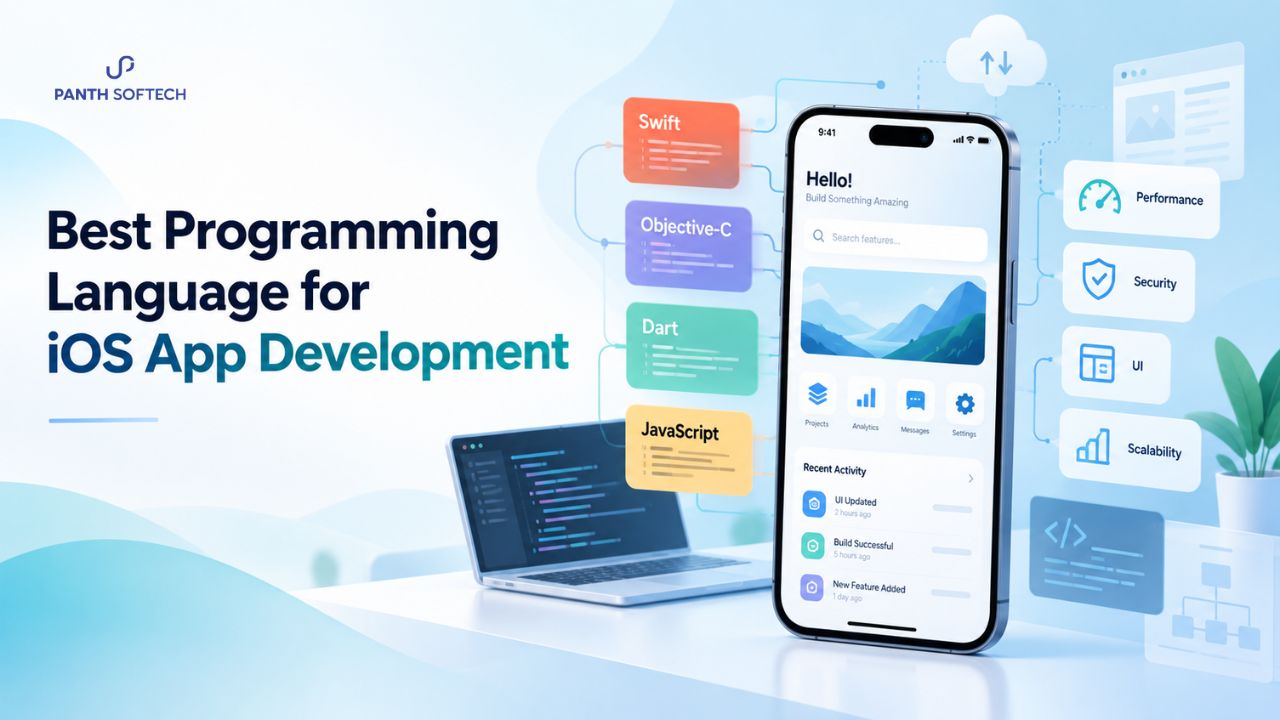
The two main programming languages used for native iPhone application development are Swift and Objective-C.
Swift is Apple’s modern programming language and is widely used for new iOS applications. Objective-C was the primary language for Apple development before Swift and is still found in many established applications and legacy codebases.
For most new projects, Swift is usually the first option to evaluate. However, an existing Objective-C application does not always need to be completely rewritten.
The right Programming Language for iOS App Development depends on your app features, existing technology, development team, budget, and long-term product plans.
Swift for Modern iOS App Development
Swift is designed for developing applications across Apple platforms and is widely used for modern iOS projects. Its concise syntax, type safety, and compatibility with current Apple frameworks make it practical for building and maintaining new applications.
Swift is especially suitable when a project requires:
- A new native iPhone or iPad application
- Integration with modern Apple frameworks
- Strong performance and native device access
- Long-term application maintenance
For businesses starting a new iPhone app development project, Swift is generally the most practical native language to consider.
Objective-C for Existing iOS Applications
Objective-C has been part of Apple software development for many years, and many older iPhone and iPad applications were built with it.
It may still be useful for maintaining older applications, adding features to existing Objective-C codebases, supporting legacy libraries, or gradually migrating an app to Swift.
Swift and Objective-C can work together, so development teams can modernize an application gradually instead of rebuilding the entire product at once. For a completely new native application, however, Swift will usually be the more suitable option.
Swift vs Objective-C: Quick Comparison
| Factor | Swift | Objective-C |
| Best suited for | New iOS applications | Existing or legacy applications |
| Syntax | Modern and concise | More verbose |
| Modern Apple frameworks | Strong support | More limited for newer Swift-focused technologies |
| Legacy app support | Can integrate with Objective-C | Very strong |
| Long-term use | Suitable for new development | Mainly relevant for existing projects |
Important iOS Development Frameworks
Choosing a Programming Language for iOS App Development is only part of the technology decision. Developers also use frameworks to build interfaces, manage data, and access device features.
SwiftUI
SwiftUI is used to build modern interfaces across Apple platforms with a declarative approach.
UIKit
UIKit provides established components for iPhone and iPad interfaces, navigation, views, and user interactions.
Foundation
Foundation supports data handling, networking, dates, files, and other common application requirements.
SwiftData
SwiftData provides a Swift-focused approach to modeling and storing application data.
Core Data
Core Data is widely used for data persistence, particularly in existing applications.
Core Location
Core Location supports location-based features such as navigation and location tracking.
Essential Tools for iOS App Development
Developers also use several tools throughout the iOS development lifecycle.
1. Xcode
Xcode is Apple’s official development environment for writing code, building interfaces, debugging, testing, and preparing apps for release.
2. iOS Simulator
The iOS Simulator allows developers to test applications on simulated iPhone and iPad devices.
3. Swift Package Manager (SwiftPM)
Swift Package Manager helps developers manage reusable Swift libraries and project dependencies.
4. XCTest
XCTest is Apple’s framework for unit, UI, and performance testing.
5. Instruments
Instruments help developers analyze memory usage, CPU activity, responsiveness, and other performance issues.
6. App Store Connect
App Store Connect is used to submit builds, manage releases, update app information, and handle App Store distribution.
What About Cross-Platform App Development?
Businesses that need both iOS and Android applications may consider Flutter, React Native, and .NET MAUI. These technologies can allow developers to share part of the codebase across platforms and reduce duplicated development effort.
| Project Requirement | Technology to Consider |
| iOS-only application | Swift |
| Deep Apple platform integration | Native Swift |
| Existing Objective-C application | Objective-C with gradual Swift adoption |
| iOS and Android with shared code | Flutter, React Native, or .NET MAUI |
| Maximum native platform access | Native development |
The choice should be based on functionality, performance, integrations, maintenance needs, and business goals.
How to Choose a Programming Language for Your Mobile App
When selecting a development technology, consider the complete project.
Define Your Target Platforms
If the app is specifically for iPhone and iPad, Swift is a natural option. If iOS and Android are equally important, cross-platform development may also be worth evaluating.
Consider Required Features
Apps that rely on cameras, Bluetooth, location services, Apple APIs, or device-specific functionality may benefit from native development.
Review Existing Technology
For an established Objective-C application, immediately rewriting everything in Swift may add unnecessary cost and risk. A gradual migration can be more practical.
Think About Maintenance, Budget, and Timeline
Applications need bug fixes, security updates, compatibility improvements, and new features after launch. Cross-platform development may reduce duplicated work, while native development can be better for Apple-specific functionality and deeper platform integration.
Which Programming Language Should You Choose for iOS Development?
For most new native iOS applications, Swift is generally the preferred choice because it is designed for Apple’s modern development ecosystem.
A practical approach is to:
- Choose Swift for a new native iOS application.
- Continue using Objective-C where needed for an established app.
- Use Swift and Objective-C together when gradually modernizing older software.
- Consider cross-platform technologies when iOS and Android need to share significant development work.
Ultimately, the best Programming Language for iOS App Development should match the application’s technical requirements, business goals, available resources, and maintenance strategy.
Why Choose Panth Softech for iOS App Development?
Panth Softech helps businesses plan and develop applications according to their technical and business requirements.
Requirement-Based Technology Selection
The development approach can be selected according to the platform, required features, scalability, existing technology, and long-term goals.
Custom Development and Integrations
Applications can be built around specific business workflows and connected with payment gateways, maps, authentication systems, analytics tools, cloud services, and other APIs.
Testing and Ongoing Support
Testing helps identify functional and compatibility issues before release, while ongoing support can cover bug fixes, updates, performance improvements, and newer iOS versions.
If you are planning a new application or modernizing an existing one, Panth Softech’s iOS app development services can support the project from planning to development and maintenance.
Final Thoughts
Selecting the right Programming Language for iOS App Development can affect how efficiently an application is built, maintained, and expanded over time. Swift is generally the strongest starting point for new native iPhone and iPad projects, while Objective-C remains important for maintaining and modernizing existing applications. The final choice should also consider platform requirements, app features, scalability, resources, budget, and future maintenance.
If your business is planning a new iOS application or wants to modernize an existing mobile product, Panth Softech can help with technology selection, application architecture, development, API integration, testing, deployment, and ongoing support.
Discuss your iOS app development requirements with Panth Softech and choose a technology approach that fits both your current product needs and long-term business goals.
FAQs About iOS Programming Languages
1. Is Swift the best language for iOS development?
Swift is generally the preferred language for new native iOS applications because it works closely with Apple’s current development tools and frameworks.
2. Is Objective-C still used for iOS apps?
Yes. Objective-C is still used in many existing applications, particularly when businesses maintain older codebases or gradually migrate them to Swift.
3. Is SwiftUI a programming language?
No. SwiftUI is a user interface framework. Swift is the programming language commonly used with it.
4. Can Python or Java be used for iOS app development?
They are not the standard choices for native iOS development. Swift is generally more appropriate for native Apple applications, while cross-platform technologies may be considered when both iOS and Android are required.
5. What programming language should beginners learn for iOS development?
Developers interested in modern native iOS development will generally benefit from learning Swift along with tools such as Xcode and frameworks such as SwiftUI.