Panth Softech Team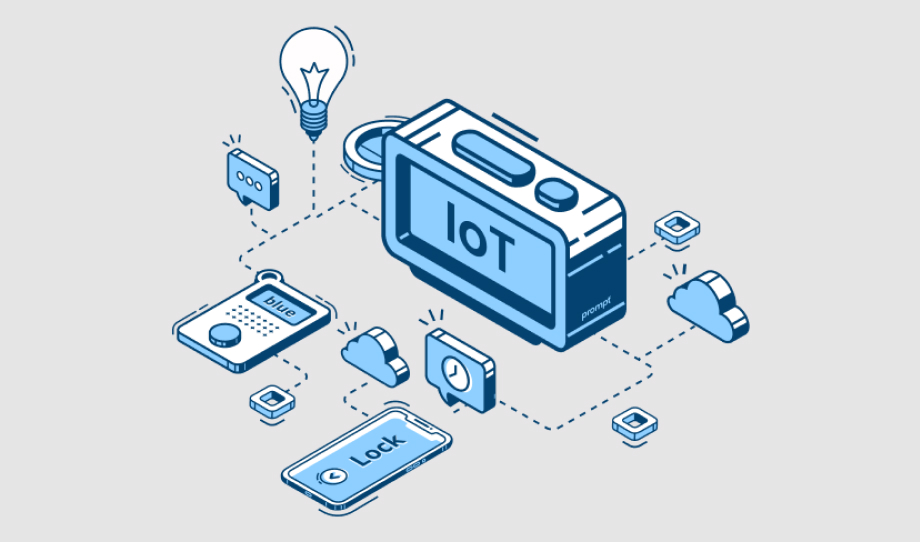
Internet of Things is now no new word for the tech world. Studies show that the number of connected devices will reach more than 75 billion by 2025, implying that there will be possibly nine connected devices for every human on earth.
The pace at which IoT technology is striking every area of our lives is impressive, but how it has transformed our day-to-day work is beyond imagination.
But what is IoT?
In simple words, it is the practice of connecting different physical assets through the internet, providing control and measurement access from the remote area while saving users money and time. Today one can set the temperature of the air conditioner while on the way home, brew coffee and efficiently manage the use of lights in the home. Products like Amazon’s Alexa and Apple’s Siri can interact and provide information as required.
Let us know how various industries are embracing the presence of the Internet of Things and the impact of this latest technology.
IoT in the manufacturing sector:
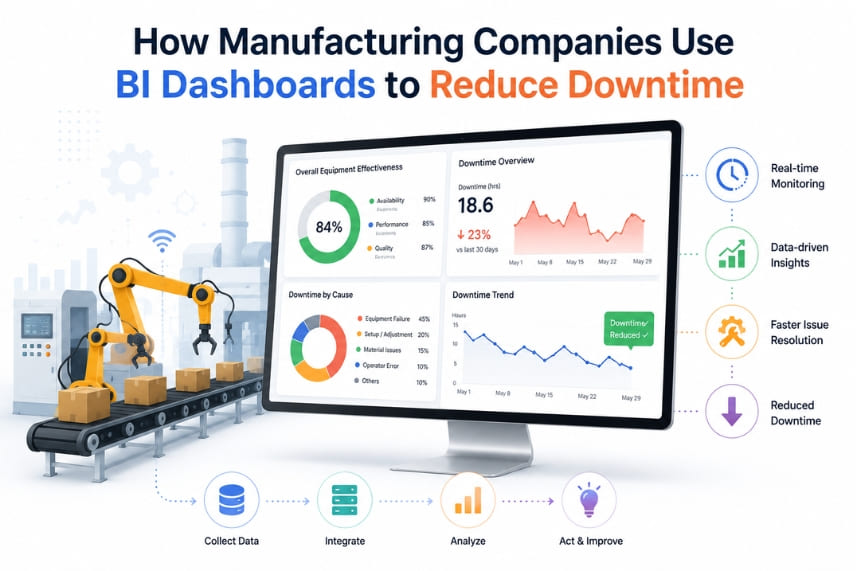
The impact of Industrial IoT technology is already visible in the output of the manufacturing industry, especially in measuring energy and asset efficiency throughout the production line.
IoT technology has provided an effective way to connect and modernize legacy assets. Using connective sensors, businesses can accumulate critical production data and use cloud software to turn this data into useful insights to know about the efficiency of their manufacturing process. But what kind of assets? It can be anything used within the manufacturing process, from its HVAC or CNC machines to products like refrigerators or lighting rings, etc.
IoT can assist by providing a clearer picture of the working of assets individually and collectively, chartering better ways for monitoring, automation, and predictive maintenance. For instance, Industrial IoT in action has enabled us to gain insight into energy consumption and the health condition of the asset. This technology even allows us to schedule maintenance by informing us about the future condition of the asset.
Employing and integrating IoT in the existing process reduces costly downtime, improves assets, and reduces energy costs.
IoT in the retail sector:
Retail sectors are already using IoT in different innovative ways. One of the key areas is tracking energy consumption not at one store but all the stores present in the entire region or at the national level.
The IoT system can also be used to know which stores are using high energy in lighting or heating; in-store sensors allow us to track energy usage at a more granular level.
Other than this, IoT is also used to optimize store experiences. It is now possible to know the interest area of the shoppers, where they are spending most of the time. This helps retailers improve their stores’ layout to reduce congestion, increase stay time and boost sales. We can say that IoT technology and its different uses are building the ‘high streets of the future.
IoT in the construction sector:
Internet of Things is also contributing to making the construction sector smarter. Smart buildings are one of the most loved concepts possible by IoT. Using IoT and integrated sensors to know the air quality of the site or the surrounding area, such as parks and schools, is one of the key usages.
IoT in construction areas allows construction managers to accurately assess the real-time effect of their work on air quality. IoT in construction also ensures the safety of construction workers and nearby people.
IoT in the agriculture Sector:
The increasing population shows that we will need more food production in the coming year. UN has also estimated that we will need to produce 70% more food to meet the global demand by 2050. Internet of Things will help this sector overcome the looming food shortage challenge by reducing food wastage and increasing yield.
Supervising and tracking workers, machine efficiency, crop and livestock health, and predicting weather are some of the ways through which IoT promises to boost productivity with minimum wastage. Employment of agriculture drones and smart agriculture sensors are already helping agriculture workers by providing real-time production data. Besides this, sensors to track important atmospheric aspects like light, humidity, temperature, air quality, and soil aspects like soil moisture, nutrition, etc., contribute to better yield. This has automated the tasks which involved manual and human interference. Thus, saving labor costs and time as well.
Another way through which IoT is helping agriculture farmers is by providing predictive analytics through better quality data. Using data, farmers can estimate the yield and make better storage plans to keep the produce after harvesting.
IoT in smart cities:
Well, IoT in urban areas has been very influential. People are enjoying the leverages provided by IoT like smart houses, smart street lights, or smart bottles. IoT has occupied an important place in the planning and management of cities. Many countries are using IoT for waste management, traffic control, and public transport systems.
Using IoT, it is now possible to know the number of people in transit at a particular time and opt for a better route to avoid congestion. In cities where flooding is a serious concern, IoT can be used to track the real-time water level in the river. The flood defense system starts when the water level increases and helps mitigate the risk.
We’re on the way to a smart connected world:
IoT has successfully infiltered in major sectors contributing to the economy’s growth. Today, if we look around, we’ll observe that everything is getting smart and automated. All thanks go to IoT for making life more hassle-free and productive. However, some areas are still untouched by the magic of IoT, but it is predicted that it will be covered soon in the coming years. It is estimated that global expenditure on IoT will be around $1,100 billion (€1060.02 billion) in 2023, almost double 2018 $646 billion (€622.52 billion).
This shows that IoT will continue to reform the industries making them more profit-oriented without compromising quality. Hence, we can conclude that high-quality data can help make anything prompt, cheap, and more efficient with less waste.
FAQ About How IoT Will Build a Bright World with Connected Devices
- What is the Internet of Things (IoT), and how does it work?
The Internet of Things (IoT) is a network of physical devices connected to the internet that collect, share, and analyze data. These devices use sensors, software, and cloud platforms to communicate in real time. IoT helps automate processes, improve decision-making, reduce manual work, and increase efficiency across homes, businesses, healthcare, manufacturing, and smart cities.
- How will IoT help build a smarter and more connected world?
IoT connects devices, people, and systems to create seamless communication and automation. It enables smart homes, intelligent transportation, connected healthcare, and industrial automation. By using real-time data, IoT improves safety, saves energy, reduces costs, and enhances everyday experiences, making cities and businesses more efficient and sustainable.
- What are the biggest benefits of using IoT solutions for businesses?
IoT helps businesses monitor equipment, automate operations, reduce downtime, and improve customer experiences. Real-time data allows faster decision-making, predictive maintenance, and better resource management. These advantages lead to higher productivity, lower operational costs, improved security, and greater business scalability across multiple industries.
- Which industries benefit the most from IoT technology?
IoT is widely used in manufacturing, healthcare, logistics, retail, agriculture, energy, automotive, and smart cities. Manufacturers use IoT for predictive maintenance, healthcare providers monitor patients remotely, and logistics companies track shipments in real time. Almost any industry that relies on data and connected devices can benefit from IoT.
- How secure are IoT devices and connected systems?
IoT security depends on proper implementation and ongoing management. Strong encryption, secure authentication, regular software updates, network monitoring, and compliance with industry standards help protect connected devices from cyber threats. Choosing an experienced IoT development partner also reduces security risks and ensures reliable long-term performance.
- How can Panth Softech help businesses implement IoT solutions?
Panth Softech provides end-to-end IoT development services, from strategy and device integration to cloud connectivity, analytics, and application development. The team builds secure, scalable, and customized IoT solutions that align with business goals, helping organizations improve operational efficiency, automate workflows, and accelerate digital transformation.
- Why should businesses choose Panth Softech for IoT development?
Panth Softech combines expertise in IoT, AI, cloud technologies, and enterprise software development to deliver tailored connected-device solutions. The company follows industry best practices, focuses on security and scalability, and provides ongoing support, ensuring businesses receive reliable IoT systems that continue delivering value as they grow.
- How do I know if my business is ready to adopt IoT?
Your business may be ready for IoT if you want to automate repetitive tasks, monitor assets remotely, improve operational efficiency, or gain real-time insights from connected devices. An IoT assessment can identify the best opportunities, expected ROI, and the right implementation strategy based on your business objectives.