Panth Softech Team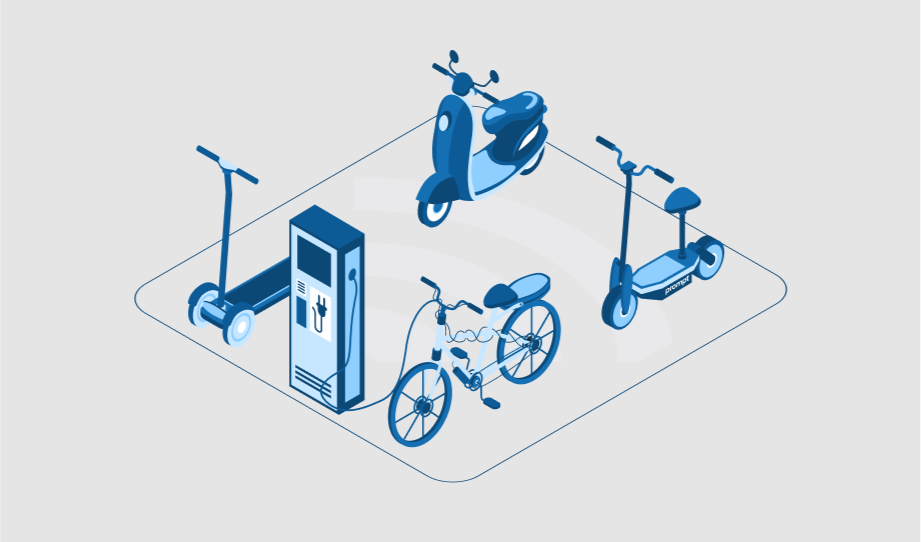
The Internet of Things is no new thing in the tech market. Just look around, and you’ll find that most of the gadgets and comfort offering solutions are connected to IoT. One of the most popular and known solutions is your virtual assistant,” Alexa.” The way that device handles other internet-connected devices in our homes is incalculable. But limiting the character and usefulness to just these things would be unfair. IoT is also immensely used in logistics, manufacturing, industrial automation, and many others. Not just this, IoT is also being used in the micro-mobility sector.
Any idea about micro-mobility?
The word micro-mobility directs to lightweight transportation for individuals. It shields different transportation options that weigh less than 500kg (1200 lbs).
Some examples are electric scooters, bicycles, e-bikes, segways, electric skateboards, etc. Micro-mobility is very different from vehicles that are used for long distances. It focuses on short distances and generally for less than five miles. There are considerable advantages to the micro-mobility market, which is the reason behind the huge investment made by tech giants. In 2020 investment in the micro-mobility market was $800 million. This scenario rocketed after the lockdown restrictions were removed. The micro-mobility brands drew around $2.9 billion in 2021.
Advantages of the Micro-mobility Market:
Let us know three specific benefits of the micro-mobility market that support these high investments:
1: Convenience
One of the most popular and justified benefits is convenience. Transportation options can help customers reach their destination early and with comfort.
2: No Parking Issues:
Parking is one of the major issues in big cities, but micro-mobility can solve this problem. You will never again face parking issues by using micro-mobility transportation choices like segways and hoverboards.
3: Cost-Effective:
As micro-mobility involves ride-sharing, it will automatically become cost-effective; you can rent without requiring any license for hoverboards or e-bikes.
Challenges Faced by the Micro Mobility Sector
The idea of micro-mobility appears appealing, but some challenges hinder the growth of businesses. However, there is zero to be upset about as long as IoT exists, as it has the potential to advance the micro-mobility market.
Data Sharing:
Suppose your own a firm that has 100 ebikes throughout the city. People take your ebikes but pay less attention to the charging levels, and why would they? They are your service bikes, and it’s your responsibility to take care of them. Well, not just this, there are many other issues like ending the ride midway, navigation issues, leaving the vehicle anywhere, and overriding the ebike that can cause damage and revenue loss.
Therefore, there is a need for a solution to collect all the necessary data about the vehicle from time to time. With IoT-connected devices like highly sensitive sensors, one can quickly get all the data related to the vehicle for analysis and make informative decisions. Moreover, adding IoT sensors will also make it manageable for you to transfer data with the traffic authorities to watch vehicle activity in a good way.
Riding Behavior:
It is pretty noticeable to see people riding aggressively on the road. This can be inspired because of different reasons like road rage or time-saving. However, no reason justifies the purpose as it can distract or put other’s life at risk. With IoT sensors installed on the vehicles, businesses can check the vehicle status and warn the rider by sending messages.
For instance, if a person is riding at high speed or cutting the lane often, sensors can record the data and share it with the related authorities for further action. This can protect vehicles from damage and save companies from getting banned due to abnormal riding behavior.
Safety:
Whether a car or a scooter, safety remains the top priority for micro-mobility service provider companies. It is essential to integrate features that protect the riders. These added features are not just limited to safety but also allow businesses to meet government requirements to secure their business.
Theft and Vandalism:
A micro-mobility company’s worst loss is when a vehicle is damaged or lost. Therefore, it is necessary to install proper security measures to prevent this from happening, and yes, IoT can help with this. By implanting a few IoT sensors, companies can stop stealing ebikes. Additionally, these sensors can also be connected to other systems to initiate warning messages.
If it is a genuine user, they can use their phone to get an OTP and use the ebike. Further, the vehicle can have environment-mapping sensors to prevent vandalism.
Scaling Service:
IoT can help in business scaling, but the critical challenge with IoT is that one needs to modify the complete system to upscale instead of a single one. The most feasible option is to get the most suitable IoT service providers. A single service provider will promise smooth and seamless scaling as the operator would have knowledge of your business operations.
Compliance:
Compliance with government standards and norms can hinder growth as they may change and be difficult to follow. However, if state-of-the-art IoT solutions back you, they can become more accessible. IoT sensors can be employed to keep riders stay within speed limits. It can guarantee that vehicle is parked at the right spot. In fact, smart sensors can also guide the riders to the nearest charging station. These criteria also guarantee that riders do the right thing and that government norms are obeyed.
IoT and Micro-mobility
IoT can support the upheaving micro-mobility market, but the only condition is that this will demand colossal investment. Once an investment is made, all other systems are managed, and only timely maintenance and upgrade is left. Investment in IoT for the micro-mobility sector promises a better future and benefits, and various tech giants like Uber and many others are forwarding toward it. This shows that micro-mobility holds a great scope in the coming years. It not just brings transportation at ease but also promises its contribution towards the environment by reducing the dependency on crude oils. The integration of micro-mobility with IoT makes it safe and futuristic.
FAQ About How IoT Boosts the Micro Mobility Market
- What is the role of IoT in the micro mobility market?
IoT (Internet of Things) connects vehicles like e-scooters, e-bikes, and shared bicycles to the internet using sensors and GPS. This allows operators to monitor vehicle location, battery health, usage, and maintenance in real time. IoT improves fleet management, enhances rider safety, and creates a more efficient and reliable micro mobility ecosystem.
- How does IoT improve the efficiency of shared micro mobility fleets?
IoT provides live data on vehicle availability, battery levels, rider behavior, and maintenance needs. Fleet operators can quickly relocate vehicles, schedule predictive maintenance, and reduce downtime. This leads to better customer experiences, lower operating costs, and higher fleet utilization while keeping vehicles in service longer.
- What are the key benefits of using IoT in micro mobility solutions?
IoT helps improve rider safety, optimize fleet operations, reduce maintenance costs, prevent theft, and provide real-time tracking. It also enables data-driven decision-making for operators and supports smart city initiatives by improving transportation efficiency and reducing traffic congestion and carbon emissions.
- How does IoT enhance rider safety in micro mobility?
IoT-enabled devices monitor vehicle performance, detect faults, and send instant alerts when maintenance is required. Features such as GPS tracking, geofencing, speed monitoring, and emergency notifications help reduce accidents and improve security. Riders benefit from safer, more reliable transportation with better operational oversight.
- Why should businesses invest in IoT-powered micro mobility solutions?
Businesses can reduce operational expenses, improve fleet visibility, increase customer satisfaction, and make better business decisions through real-time analytics. IoT also supports predictive maintenance and automated fleet management, helping operators maximize profitability while delivering reliable mobility services to customers.
- How does Panth Softech help businesses build IoT-powered micro mobility solutions?
Panth Softech develops customized IoT solutions for micro mobility businesses, including smart fleet management, GPS tracking, predictive maintenance, mobile applications, cloud integration, and real-time analytics. The company builds scalable platforms that improve operational efficiency, user experience, and long-term business growth.
- Why choose Panth Softech for IoT development in the micro mobility industry?
Panth Softech combines expertise in IoT, AI, cloud technologies, and custom software development to deliver secure and scalable mobility solutions. The team focuses on business-specific requirements, seamless system integration, data security, and ongoing support, helping companies accelerate digital transformation with confidence.
- Is IoT suitable for both startups and large micro mobility companies?
Yes. IoT solutions are highly scalable and can support businesses of all sizes. Startups can launch with essential tracking and fleet management features, while larger enterprises can integrate advanced analytics, AI, predictive maintenance, and smart city connectivity as their operations expand.