Panth Softech Team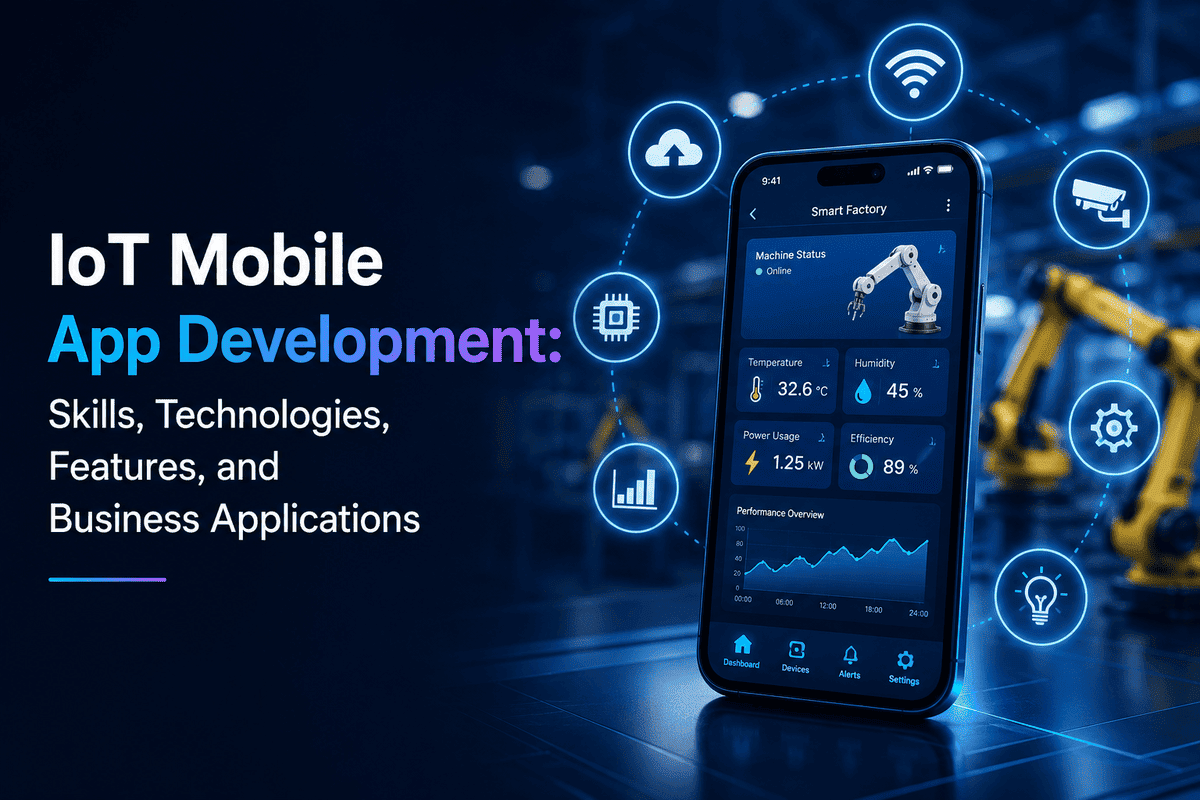
The Internet of Things (IoT) is transforming how businesses connect, monitor, and manage devices across industries. From smart manufacturing and connected healthcare to fleet management and precision agriculture, IoT ecosystems help organizations work more efficiently. They also automate workflows and deliver better user experiences.
At the center of every successful IoT ecosystem is a powerful mobile application. IoT mobile app development enables businesses to monitor connected devices, analyze real-time data, automate processes, and control equipment remotely through smartphones and tablets.
As organizations continue investing in digital transformation initiatives, the demand for custom IoT app development and enterprise IoT solutions is growing rapidly. However, building a secure and scalable IoT mobile app takes the right mix of skills and tools. It also needs strong cloud infrastructure. It requires good security practices. It must support the right connectivity options.
In this guide, we’ll cover the key skills, tools, features, and business uses for IoT mobile app development. We’ll also look at new trends shaping the future of connected apps.
What Is IoT Mobile App Development?
IoT mobile app development is the process of making mobile apps that connect to IoT devices. These apps communicate with sensors, gateways, and cloud platforms.
These applications enable users to:
- Monitor connected devices remotely
- Control smart devices in real time
- Access operational data
- Receive alerts and notifications
- Analyze performance metrics
- Automate workflows
An IoT mobile app acts as the interface between users and connected devices, allowing businesses to manage operations efficiently from virtually anywhere.
Modern IoT application development often combines:
- Mobile app development
- Cloud computing
- Embedded systems
- Data analytics
- Real-time communication
- IoT security frameworks
Organizations working with an experienced IoT app development company can build scalable applications that support thousands of connected devices while maintaining security and performance.
How IoT Mobile Apps Work
An IoT mobile application connects multiple components within an IoT ecosystem.
The typical architecture includes:
IoT Devices and Sensors
IoT devices collect operational data from machines, vehicles, equipment, wearables, and other connected assets.
Examples include:
- Temperature sensors
- GPS trackers
- Smart meters
- Industrial equipment
- Wearable devices
- Environmental monitoring systems
Connectivity Layer
Data is transmitted through communication technologies such as:
- Wi-Fi
- Bluetooth
- MQTT
- Zigbee
- LoRaWAN
- NFC
- 5G networks
Reliable connectivity ensures real-time communication between devices and mobile applications.
Cloud Infrastructure
Cloud platforms process and store IoT data.
Popular cloud platforms include:
- AWS IoT
- Microsoft Azure IoT
- Google Cloud IoT
Cloud infrastructure enables scalability, analytics, and centralized device management.
Mobile Application
The IoT mobile application allows users to:
- Monitor devices
- Visualize data
- Receive alerts
- Control equipment
- Manage users
- Access analytics dashboards
This layer delivers the user experience that drives business value.
Benefits of IoT Mobile App Development
Businesses across industries are investing in IoT development services because of the measurable operational benefits they deliver.
Real-Time Monitoring
IoT mobile apps provide real-time visibility into connected assets and operations.
Organizations can monitor:
- Equipment performance
- Production status
- Vehicle locations
- Environmental conditions
- Energy consumption
Remote Device Control
Users can remotely control IoT devices through mobile applications, reducing manual intervention and improving operational efficiency.
Improved Decision-Making
IoT applications provide access to real-time analytics and operational data, enabling organizations to make data-driven decisions.
Increased Automation
IoT ecosystems automate repetitive processes, reduce human error, and improve productivity.
Enhanced Customer Experience
Businesses can deliver personalized and connected experiences through smart device applications and mobile interfaces.
Essential Skills Required for IoT Mobile App Development
Building a successful IoT mobile application requires expertise across multiple technologies.
Mobile App Development Skills
Developers must understand mobile application development principles for both Android and iOS platforms.
Key skills include:
- Android app development
- iOS app development
- Flutter development
- React Native development
- Mobile UI/UX design
- Performance optimization
Cross-platform development frameworks such as Flutter and React Native help accelerate IoT mobile application development while reducing development costs.
Cloud Computing Knowledge
Most IoT solutions rely heavily on cloud infrastructure.
Developers should understand:
- Cloud architecture
- AWS IoT services
- Azure IoT solutions
- Google Cloud IoT
- Cloud databases
- Serverless computing
Cloud expertise is critical for building scalable enterprise IoT solutions.
Embedded Systems Understanding
IoT developers often interact with hardware devices and embedded systems.
Knowledge of:
- Sensors
- Microcontrollers
- Firmware
- Device communication protocols
helps ensure seamless integration between devices and applications.
IoT Security Expertise
Security remains one of the most important aspects of IoT software development.
Developers must understand:
- Device authentication
- Data encryption
- Access control
- Secure communication protocols
- Cybersecurity best practices
Strong IoT security frameworks help protect sensitive business and user data.
API Integration Skills
Modern IoT mobile applications rely on APIs for communication between devices, cloud platforms, and third-party services.
Developers should be proficient in:
- REST APIs
- GraphQL
- WebSockets
- Third-party integrations
- Data synchronization
Efficient API integration ensures reliable data exchange across the ecosystem.
Technologies Used in IoT Mobile App Development
The success of an IoT mobile application depends heavily on selecting the right technology stack. Businesses investing in IoT application development should focus on technologies that provide scalability, security, real-time communication, and seamless device connectivity.
Connectivity Technologies
Connectivity is the foundation of every IoT ecosystem. Different communication protocols are used depending on device type, range requirements, and power consumption.
Popular connectivity technologies include:
- Wi-Fi
- Bluetooth Low Energy (BLE)
- MQTT
- Zigbee
- LoRaWAN
- NFC
- 5G Connectivity
These technologies enable real-time communication between mobile applications and connected devices.
Cloud Platforms for IoT Applications
Cloud platforms provide centralized data storage, device management, analytics, and scalability.
Commonly used platforms include:
- AWS IoT Core
- Microsoft Azure IoT Hub
- Google Cloud IoT
- IBM Watson IoT
- Oracle IoT Cloud
Organizations often combine IoT development services with cloud services to create highly scalable and secure connected ecosystems.
Mobile Development Frameworks
Modern IoT mobile app development frequently utilizes:
- Flutter
- React Native
- Swift
- Kotlin
- Xamarin
Cross-platform frameworks help businesses reduce development costs while maintaining a consistent user experience across Android and iOS devices.
Edge Computing Platforms
As IoT networks generate massive amounts of data, edge computing is becoming increasingly important.
Edge computing solutions process data closer to devices rather than sending everything to the cloud.
Benefits include:
- Reduced latency
- Faster decision-making
- Lower bandwidth consumption
- Improved application performance
Many organizations are integrating edge computing solutions into their IoT ecosystems to support real-time operations.
Must-Have Features of an IoT Mobile App
A successful IoT mobile application should provide more than just device connectivity. It must deliver a seamless, secure, and intelligent user experience.
Real-Time Monitoring Dashboard
Users should be able to monitor connected devices through an intuitive dashboard displaying:
- Device status
- Performance metrics
- Sensor readings
- Operational alerts
- Usage analytics
Real-time monitoring is one of the most important features of modern IoT applications.
Device Management
Businesses need the ability to:
- Register devices
- Configure settings
- Monitor health
- Update firmware
- Troubleshoot remotely
Effective device management simplifies large-scale IoT deployments.
Push Notifications and Alerts
IoT mobile apps should deliver instant notifications when:
- Devices malfunction
- Thresholds are exceeded
- Maintenance is required
- Security incidents occur
This enables faster responses and improved operational efficiency.
Data Analytics and Visualization
Users need actionable insights, not just raw data.
IoT applications should include:
- Interactive dashboards
- Trend analysis
- Predictive insights
- Performance reports
- KPI tracking
Organizations often combine IoT data analytics capabilities with AI-powered systems to improve decision-making.
Geolocation Tracking
Location-based tracking is particularly valuable for:
- Fleet management
- Asset tracking
- Logistics operations
- Field service applications
GPS-enabled IoT applications improve visibility and operational control.
Security and User Authentication
Security features should include:
- Multi-factor authentication
- Role-based access control
- Data encryption
- Secure APIs
- Device authentication
Strong security measures are essential for enterprise IoT solutions.
Popular IoT Mobile App Use Cases
IoT mobile applications are transforming industries by enabling intelligent automation, remote monitoring, and data-driven operations.
Smart Manufacturing and Industrial IoT
Manufacturing is one of the fastest-growing sectors adopting IoT technologies.
Industrial IoT solutions help manufacturers:
- Monitor equipment performance
- Reduce downtime
- Optimize production
- Improve quality control
- Enable predictive maintenance
Mobile applications allow factory managers to access operational data in real time and manage connected assets remotely.
Organizations investing in industrial IoT solutions often combine connected devices, cloud infrastructure, AI, and analytics to create smart factory environments.
Logistics and Fleet Management
IoT mobile applications play a critical role in logistics and transportation.
Use cases include:
- Vehicle tracking
- Fleet monitoring
- Route optimization
- Asset tracking
- Fuel management
Real-time visibility improves efficiency and reduces operational costs.
Agriculture and Smart Farming
Agriculture is rapidly adopting IoT-powered solutions to improve productivity and sustainability.
IoT mobile applications support:
- Soil monitoring
- Irrigation management
- Crop health analysis
- Weather tracking
- Precision agriculture
Farmers can monitor operations remotely and make informed decisions using real-time data.
Healthcare and Connected Medical Devices
Healthcare organizations use IoT applications for:
- Remote patient monitoring
- Wearable device management
- Health data tracking
- Connected medical equipment
- Telehealth solutions
IoT-enabled healthcare improves patient care while reducing operational burdens.
Smart Homes and Smart Buildings
Consumer-focused IoT applications enable users to control:
- Lighting systems
- HVAC equipment
- Security systems
- Smart appliances
- Energy management solutions
These applications deliver convenience, efficiency, and automation.
The Role of AI in IoT Mobile App Development
Artificial Intelligence and IoT are increasingly working together to create intelligent connected ecosystems.
AI-powered IoT applications can:
- Predict equipment failures
- Analyze user behavior
- Automate workflows
- Optimize resource usage
- Generate predictive insights
For example, manufacturing companies use AI-powered industrial IoT solutions to identify maintenance issues before equipment failures occur.
Businesses can also integrate AI development services into IoT ecosystems to enhance automation and decision-making capabilities.
Machine learning algorithms continuously analyze data generated by connected devices, improving application performance and business outcomes over time.
IoT Data Analytics: Turning Data Into Business Value
Connected devices generate enormous volumes of operational data.
Without proper analysis, this data provides little business value.
IoT data analytics helps organizations:
- Identify patterns
- Detect anomalies
- Improve forecasting
- Optimize operations
- Enhance customer experiences
Businesses that leverage IoT data analytics can gain significant competitive advantages through data-driven decision-making.
Modern analytics platforms often combine:
- IoT sensors
- Cloud computing
- Machine learning
- Business intelligence tools
- Real-time dashboards
This creates a complete ecosystem for operational intelligence.
Custom Software Development and IoT Integration
Every organization has unique business processes and operational requirements.
As a result, many businesses choose custom software development rather than relying solely on off-the-shelf IoT platforms.
Custom IoT applications provide:
- Greater flexibility
- Better scalability
- Industry-specific functionality
- Seamless integrations
- Enhanced security
Organizations often work with providers specializing in custom software development and mobile app development to build solutions tailored to their business needs.
Custom-built IoT ecosystems are particularly valuable for manufacturing, logistics, healthcare, agriculture, and enterprise operations.
Challenges in IoT Mobile App Development
While IoT mobile app development offers tremendous business opportunities, building a secure, scalable, and reliable IoT application comes with several challenges.
Device Compatibility
IoT ecosystems often include multiple device types, operating systems, communication protocols, and hardware manufacturers.
Developers must ensure seamless interoperability between:
- IoT devices
- Sensors
- Mobile applications
- Cloud platforms
- Third-party systems
Maintaining compatibility across a growing ecosystem can become complex.
Security and Data Privacy
IoT security remains one of the biggest concerns for businesses implementing connected solutions.
Common security challenges include:
- Unauthorized device access
- Data breaches
- Weak authentication mechanisms
- Network vulnerabilities
- Device hijacking
Organizations should implement:
- End-to-end encryption
- Multi-factor authentication
- Secure APIs
- Device identity management
- Access control policies
Strong IoT security practices are essential for protecting sensitive business and customer data.
Scalability Challenges
As businesses add more connected devices, application infrastructure must scale accordingly.
Scalable IoT architecture should support:
- Thousands of devices
- Real-time communication
- High data volumes
- Cloud-based processing
- Continuous monitoring
Cloud services play a critical role in enabling scalable IoT deployments.
Data Management Complexity
Large IoT ecosystems generate enormous volumes of data.
Organizations often struggle with:
- Data storage
- Data integration
- Data quality
- Analytics processing
- Real-time reporting
Implementing proper IoT data analytics and data engineering practices helps organizations maximize the value of their IoT investments.
Future Trends in IoT Mobile App Development
The IoT landscape continues to evolve rapidly as emerging technologies reshape connected ecosystems.
Businesses planning future IoT initiatives should pay attention to these trends.
AI-Powered IoT Applications
Artificial Intelligence is increasingly being integrated into IoT ecosystems.
AI-powered IoT applications can:
- Predict equipment failures
- Automate workflows
- Improve user experiences
- Generate predictive insights
- Optimize operations
The combination of IoT development services and AI development services is enabling organizations to build more intelligent connected systems.
Edge AI and Edge Computing
Traditional IoT applications rely heavily on cloud processing.
However, edge computing solutions allow data to be processed closer to devices.
Benefits include:
- Faster response times
- Reduced latency
- Lower bandwidth costs
- Improved reliability
- Better real-time decision-making
Edge AI is expected to play a significant role in the future of industrial IoT and smart device applications.
Digital Twins
Digital twins create virtual representations of physical assets and connected systems.
When integrated with IoT applications, digital twins help organizations:
- Simulate real-world scenarios
- Monitor asset performance
- Predict maintenance requirements
- Optimize operational efficiency
Industries such as manufacturing, logistics, healthcare, and energy are increasingly adopting digital twin technologies.
5G-Powered IoT Ecosystems
The expansion of 5G networks is accelerating IoT innovation.
5G enables:
- Faster connectivity
- Higher device density
- Improved reliability
- Lower latency
These capabilities support advanced IoT use cases, including autonomous systems, smart cities, industrial automation, and connected healthcare.
Smart Manufacturing and Industry 4.0
Industry 4.0 initiatives continue to drive IoT adoption across manufacturing environments.
Manufacturers are increasingly implementing:
- Industrial IoT solutions
- Smart factory systems
- Predictive maintenance platforms
- Connected production environments
- Real-time analytics applications
IoT mobile applications serve as a critical interface for monitoring and managing these intelligent manufacturing ecosystems.
How Panth Softech Helps Businesses Build IoT Mobile Applications
Building a successful IoT ecosystem requires expertise across mobile development, cloud infrastructure, connected devices, analytics, security, and enterprise software integration.
Panth Softech helps organizations design, develop, and deploy scalable IoT solutions tailored to their business requirements.
Our expertise includes:
IoT Development Services
We build custom IoT applications that enable businesses to connect, monitor, and manage devices through secure and scalable mobile platforms.
IoT Strategy & Consulting
Our consultants help organizations identify IoT opportunities, evaluate technology requirements, and create implementation roadmaps aligned with business goals.
Smart Devices & Embedded Systems
We develop intelligent device ecosystems that integrate seamlessly with mobile applications, cloud platforms, and enterprise systems.
Industrial IoT Solutions
Our industrial IoT solutions help manufacturers improve operational visibility, reduce downtime, automate processes, and enhance productivity.
IoT Data Analytics
We transform raw device data into actionable insights through advanced analytics, reporting, and visualization solutions.
Edge Computing Solutions
Our edge computing solutions enable real-time data processing and decision-making closer to connected devices.
Mobile App Development
We create intuitive and scalable Android, iOS, and cross-platform applications that serve as the foundation of modern IoT ecosystems.
Cloud Services
Our cloud services help organizations deploy secure, scalable, and enterprise-ready IoT platforms capable of supporting large-scale connected environments.
FAQs for IoT Mobile App Development
Why is IoT mobile app development important?
IoT mobile applications provide users with real-time visibility, remote device management, operational insights, and automation capabilities that improve business efficiency.
What technologies are used in IoT mobile app development?
Common technologies include Bluetooth, Wi-Fi, MQTT, Zigbee, LoRaWAN, cloud platforms, mobile development frameworks, edge computing, and IoT security solutions.
What skills are required for IoT mobile app development?
Key skills include mobile application development, cloud computing, IoT architecture, embedded systems, API integration, cybersecurity, and data analytics.
How much does IoT mobile app development cost?
The cost depends on factors such as application complexity, device integrations, cloud infrastructure, security requirements, analytics features, and platform support.
Which industries use IoT mobile applications?
Industries including manufacturing, logistics, healthcare, agriculture, retail, smart homes, transportation, and energy actively use IoT mobile applications.
What is the future of IoT mobile app development?
The future includes AI-powered IoT applications, edge computing, digital twins, 5G connectivity, industrial IoT, and intelligent automation.
Why should businesses invest in IoT app development?
IoT applications improve operational efficiency, automate workflows, reduce costs, enhance visibility, and support data-driven business decisions.