Panth Softech Team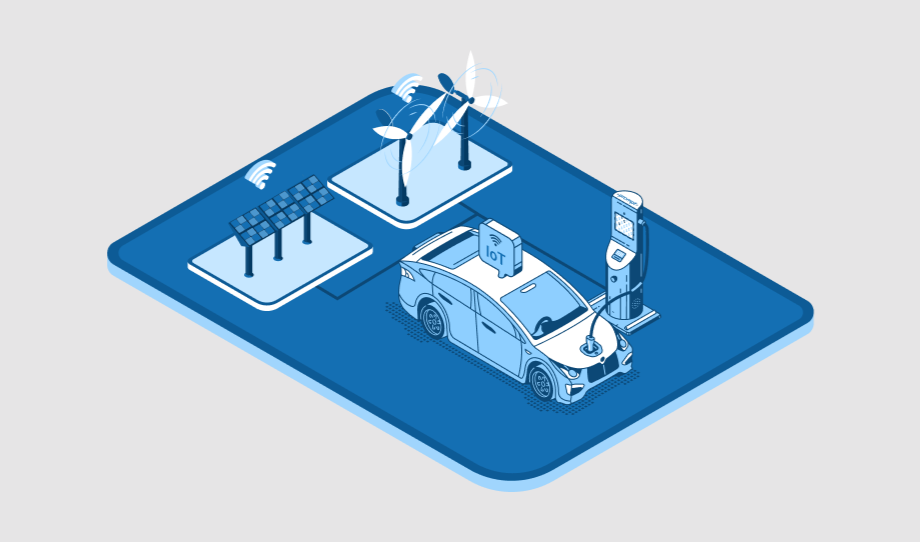
The evolution in the vehicle industry is remarkable. The increasing vehicle demand is not just consuming natural crude oil but also giving pollution as its by-product. The increasing temperature of the earth is significantly impacting the lives of humans as well as animals. This menace is not just limited to living organisms but also disturbs the climate and ecology.
With the emerging need to control the increasing pollution and make a drive more comfortable and safe, the addition of electronic vehicles is applaudable. Today, Electronic vehicles that are EVs have taken an ambitious place in many car manufacturing companies, proudly joined by Tesla, which is launching all-electric models. Electronic Vehicles are the need of the hour.
With this remarkable evolution and acceptance by the crowd, there is an inevitable demand to have a solution to keep these cars charged outside of a home.
Besides supplying the electricity to charge an electronic vehicle, electric vehicle charging stations provide a wealth of information to owners, operators, and drivers. The credit for these things goes to the Internet of Things and cellular connectivity.
The futuristic IoT Charging Stations: Charging EVs
An Electronic Vehicle charging station is connected to IoT and offers numerous benefits to the operator and consumer. If we take up the consumer’s perspective, there is a lot of information and knowledge one needs to acquire, like the location of the charging stations installed on the way. How much time will it take to get the EV charged fully? How much will it cost? These are sets of questions that EV charging stations can answer. And often, these stations have facilities to pay directly from a mobile app because of IoT, making things convenient for EV owners.
And if we take the operator’s side, IoT enables operators to achieve critical information about each EV charging station without physically visiting the station. It informs the operator about how often it is being used to alert for the upcoming maintenance required or failure of the machine. All of this information can improve efficiency, which, ultimately, helps in improving ROI. It helps in scheduling preventative maintenance or decreasing on-site time with the devices.
However, we are still living in the initial days of EVs, and we anticipate improvement in adoption and innovation with the government’s recent push to spend on climate change initiatives.
Inflation Reduction Act: Funding in Climate Change
The Inflation Reduction Act has become a topic for discussion this summer. This broad proposition was created to encounter inflation, bargain prescription drug prices, and extend the developed Affordable Care Act program for three years. It invests in manufacturing, domestic energy production, and lowering carbon emissions.
The Energy Security and Climate Change Investments in the Inflation Reduction Act aimed to control energy usage, and positioned the U.S. on the route to minimize carbon emissions approx 40 percent by the end of 2030. This bill targeting the reduction in carbon emissions holds many vital aspects, including reducing energy costs for citizens, increasing energy security, attracting more investment for decarbonizing all sectors of the economy, funding disadvantaged or remote communities, and supporting resilient rural communities.
Inflation Reduction Act: Helping EV Growth
Compared to vehicles that run on natural gas or diesel/petrol, Electronic vehicle causes less environmental impact. It has been proven to be a better option that not just solves the traveling issue but also helps in saving the environment.
Everyone in the industry, either its manufacturers who build EVs or the consumers who enjoy the drive, can leverage the benefit. The benefit offered by Electronic Vehicle also includes:
- Up to$10 a billion investment tax credit to develop clean technology manufacturing facilities, including those companies that manufacture electric vehicles, wind turbines, and solar panels.
- Almost $2 billion in assistance to retool existing auto manufacturing structures to manufacture clean vehicles.
- Up to $20 billion in loans to construct new clean vehicle manufacturing buildings across the country.
- Govt is providing tax credits and assistance for clean fuels and commercial vehicles to decrease emissions from all parts of the transportation sector.
- Almost $1 billion for promoting clean heavy-duty vehicles.
The Inevitable Demand for Connectivity
The development of IoT and its endless potential has changed the outlook of the entire world. From smart towns to smart streets, smart hospitals to smart homes, smart tv to smart bottles, IoT has leveled up the world and improved efficiency. The addition of IoT in almost all sectors, including electronic vehicles, has changed the working process while improving user experience.
The collaboration of IoT with Electronic Vehicles also marks that IoT holds the potential to save the environment and ecology; we just need to work more on this technology and exploit it to its full potential. In the coming year, we can expect more innovative solutions that will improve the service quality and also promise to stay environmentally friendly.
However, the introduction of electronic vehicles and the addition of IoT will indeed require more investment and evolvement. There are some challenges that need to be addressed. The extensive spending on clean vehicles will also drive the need for more connected charging stations across the country to support consumers, operators, and commercial vehicles. Electric vehicle charging stations driven by IoT will shortly become essential and significant support for all EVs.
Nevertheless, EVs will be the lifeline of the future transportation system, and IoT, along with other technologies like artificial intelligence and cloud, will become its spinal cord.
FAQ About How IoT Supports Electric Vehicle Charging and Keeps EVs Running
- What is the role of IoT in electric vehicle charging?
IoT (Internet of Things) connects EV charging stations, vehicles, and cloud platforms to share real-time data. This allows users to monitor charging status, locate available chargers, schedule charging sessions, and receive maintenance alerts. It helps improve efficiency, reduce downtime, and create a smoother charging experience.
- How does IoT improve the performance of EV charging stations?
IoT continuously tracks charger health, power usage, and operating conditions. If a fault is detected, the system can send instant alerts for remote diagnostics or predictive maintenance. This reduces unexpected failures, improves charger uptime, and ensures EV drivers have reliable access to charging services.
- How does IoT help keep electric vehicles running efficiently?
IoT collects real-time vehicle data such as battery health, charging patterns, energy consumption, and driving performance. Fleet managers and EV owners can use these insights to optimize charging schedules, improve battery lifespan, reduce maintenance costs, and avoid unexpected vehicle breakdowns.
- Can IoT support smart charging and energy management?
Yes. IoT enables smart charging by adjusting charging times based on electricity demand, grid availability, and energy prices. It also integrates with renewable energy sources and battery storage systems, helping businesses reduce energy costs while maintaining efficient EV charging operations.
- Why should businesses invest in IoT-enabled EV charging solutions?
IoT-powered charging infrastructure offers better operational visibility, remote monitoring, automated maintenance, and detailed usage analytics. These capabilities reduce operational costs, improve customer satisfaction, increase charger availability, and help businesses scale their EV charging networks more effectively.
- How does Panth Softech develop IoT solutions for EV charging?
Panth Softech designs custom IoT solutions that connect EV chargers, cloud platforms, mobile applications, and backend management systems. The company focuses on secure connectivity, real-time monitoring, predictive analytics, and scalable architectures that support growing EV infrastructure and future business needs.
- Why choose Panth Softech for IoT-based EV charging development?
Panth Softech combines expertise in IoT, cloud computing, AI, and enterprise software development to build reliable EV charging solutions. Businesses benefit from customized platforms, secure data management, seamless third-party integrations, and ongoing technical support for long-term operational success.
- Is IoT-enabled EV charging secure for businesses and users?
Yes, when implemented correctly. Modern IoT platforms use encrypted communication, secure authentication, cloud security practices, and continuous monitoring to protect devices and user data. Regular software updates and compliance with industry standards further strengthen the security of EV charging infrastructure.