Panth Softech Team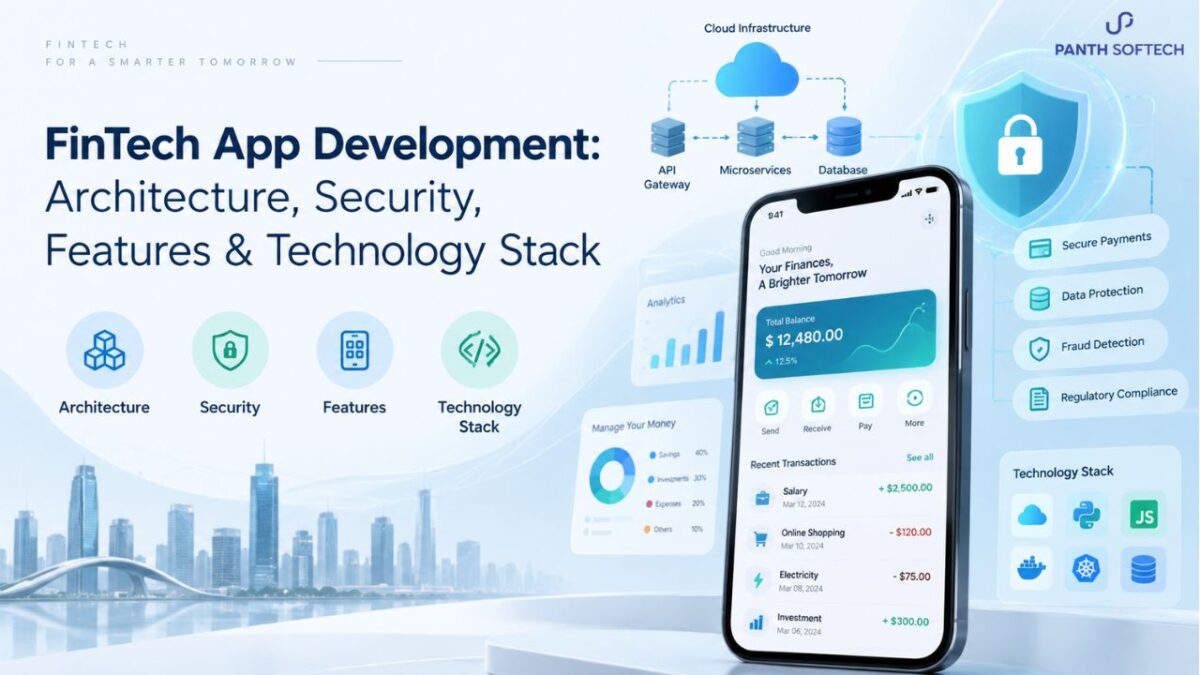
People now expect to pay, borrow, save, and invest from a single app, and they expect it to work instantly and safely. That expectation is why fintech app development has become one of the most in-demand areas in software.
It is also one of the most demanding. A fintech app handles real money and sensitive identity data. It must follow strict regulations, stay online at peak load, and earn user trust from the very first screen. One weak point in security or design can undo months of work.
This guide walks you through everything you need to plan a successful fintech product:
- What fintech app development involves and the types of apps you can build
- A step-by-step process for how to build a fintech app
- Architecture, features, and APIs
- Fintech app security and compliance
- The fintech app tech stack
- Fintech app development cost and timelines
- How to choose the right fintech app development company
Key Takeaways
- Fintech app development is the process of building secure digital products for payments, banking, lending, investing, and insurance.
- Launch with a focused MVP, then grow based on real user data.
- Build security and compliance into the product from day one rather than treating them as final-stage requirements.
- A modular, API-first, cloud-ready architecture can help fintech products scale efficiently.
- Cost depends on features, integrations, compliance requirements, platforms, and team location.
- Your development partner matters as much as your technology choices.
1. What Is FinTech App Development?
Fintech (financial technology) app development is the process of planning, designing, building, testing, and launching software that delivers financial services digitally. These services include payments, transfers, lending, investing, insurance, budgeting, and banking.
It differs from regular app development in three important ways:
- Compliance is mandatory. Rules such as KYC, AML, and PCI DSS can shape how the product is designed and operated.
- Security is critical. You are protecting money, financial information, and personal identity data.
- Reliability is non-negotiable. A failed transaction can directly affect a user’s money and trust in the platform.
Modern fintech products also use cloud computing, data engineering, AI and machine learning, and open APIs to make financial services faster, more accessible, and easier to manage.
2. Benefits of Building a Fintech App
Whether you are a startup or an established institution, a well-built fintech app can help you:
- Work more efficiently: Automation can reduce manual paperwork, approvals, and reconciliation.
- Reach more customers: Users can access financial services from almost anywhere without visiting a physical branch.
- Strengthen security: Biometrics, encryption, authentication, and real-time monitoring can help protect financial transactions and user information.
- Make smarter decisions: Transaction data can reveal spending patterns, credit risk indicators, and product opportunities.
- Personalize the experience: Users can receive relevant alerts, insights, recommendations, and offers.
- Lower operating costs: Digital onboarding and self-service can reduce processing and support effort.
- Innovate faster: A flexible digital platform can make it easier to introduce new products and features.
3. Types of Fintech Apps
Payment & Wallet Apps
Support P2P transfers, merchant payments, digital wallets, and other payment services.
Digital Banking Apps
Provide digital accounts, transfers, cards, savings features, and spending controls.
Lending Apps
Support loan applications, credit assessment, loan servicing, and repayments.
Investment Apps
Enable investing, trading, portfolio management, and investment tracking.
Personal Finance Apps
Help users manage budgets, track expenses, monitor savings, and set financial goals.
Insurtech Apps
Support insurance purchases, policy management, premium payments, and claims.
RegTech Apps
Automate compliance activities such as KYC, AML monitoring, reporting, and regulatory workflows.
Cryptocurrency Apps
Support digital asset wallets, asset tracking, trading, and crypto transactions where permitted by applicable regulations.
4. How to Build a Fintech App: Step-by-Step
If you are wondering how to build a fintech app, the following process provides a practical starting point.
Step 1: Research the Market and Pick a Niche
Decide who you are building for and which problem you want to solve. Study competitors, identify market gaps, and choose one clear niche.
For example, you could focus on instant payments for small merchants or financial tools for gig workers. A focused product is easier to validate than an app that tries to solve every financial problem at once.
Step 2: Map the Regulations Early
Identify which licenses, regulations, and compliance requirements apply to your target market before development begins.
Requirements can differ significantly between markets such as India, the USA, the EU, and other jurisdictions. Getting regulatory requirements wrong late in development can lead to expensive rework.
Step 3: Define Your MVP and Features
Run a product discovery workshop, create user stories, and prioritize features based on customer value and development effort.
Your MVP should contain only the functionality needed to test your core product idea.
Step 4: Design a Simple, Trust-Building UI/UX
In fintech, design contributes directly to user confidence.
Keep onboarding clear, show transaction confirmations, explain important actions, and make security controls easy to understand.
Progressive onboarding can also help collect information in stages rather than presenting users with one long registration form.
Step 5: Choose the Architecture and Tech Stack
Decide on your cloud environment, backend technologies, databases, mobile framework, and third-party services.
Prioritize security, scalability, maintainability, and regulatory requirements when choosing technologies.
Step 6: Develop and Integrate
Build the frontend, backend, APIs, and administrative interfaces in structured development cycles.
Depending on the product, integrations may include payment gateways, KYC providers, banking APIs, credit bureaus, notification services, and fraud-monitoring tools.
Step 7: Test for Security, Performance, and Compliance
Go beyond standard functional testing.
Run penetration tests, vulnerability scans, load tests, API security testing, integration testing, and applicable compliance checks before processing real financial transactions.
Step 8: Launch to a Small Group First
Release the product to a controlled group of users.
Monitor transaction success rates, onboarding completion, user drop-off, errors, support requests, and security alerts before expanding access.
Step 9: Monitor, Scale, and Improve
Use analytics, customer feedback, transaction data, and operational monitoring to plan future releases.
Regulations, fraud patterns, technologies, and customer expectations continue to evolve, so fintech products require continuous improvement after launch.
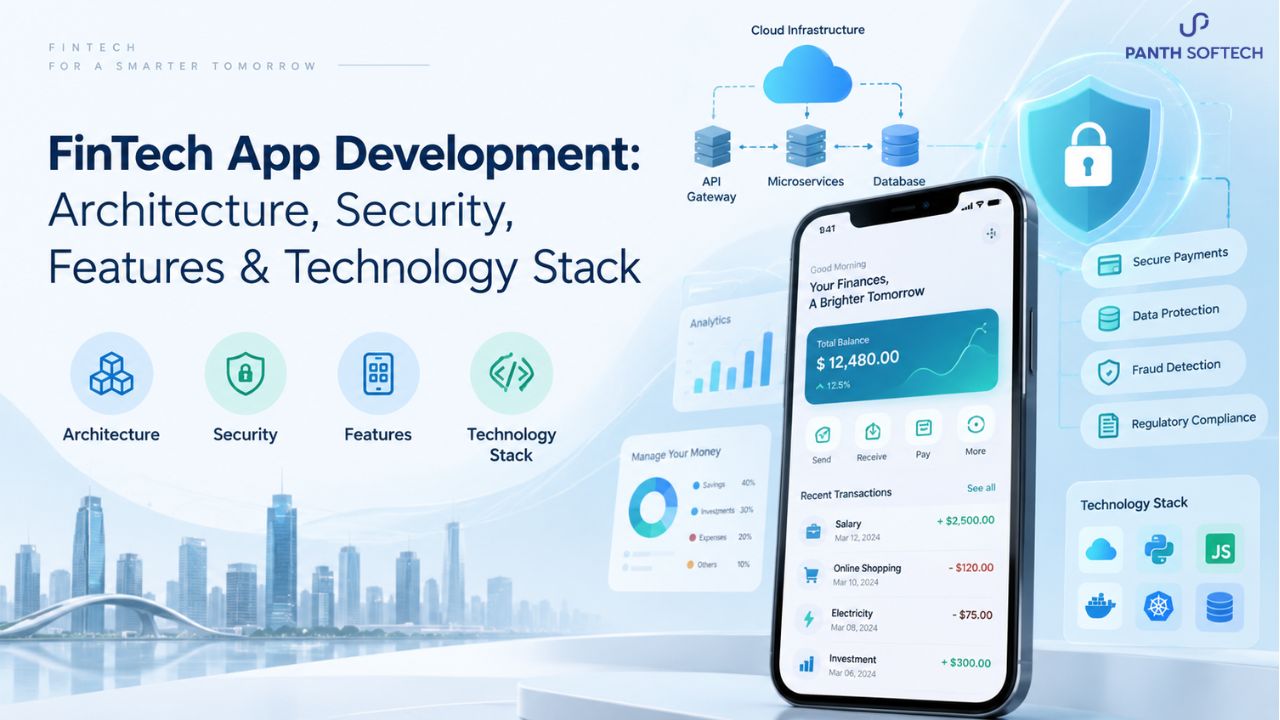
5. Fintech App Architecture
Good architecture helps a fintech application handle high traffic, integrate with external financial services, and add new capabilities without creating unnecessary dependencies.
Modular Architecture
A modular architecture separates major business functions such as authentication, accounts, payments, ledger, notifications, and reporting into clearly defined modules.
API-First Design
An API-first approach makes it easier to connect the application with banks, payment processors, KYC providers, partners, and other financial services.
Cloud-Native Infrastructure
Containers, orchestration, auto-scaling, monitoring, and multi-zone deployment can help applications handle changing workloads and improve availability.
Event-Driven Processing
Message queues and event streams can process transactions, alerts, fraud checks, and other asynchronous operations without unnecessarily slowing the user experience.
Dedicated Data Layer
Transactional databases help maintain accurate financial records, while data warehouses and analytics platforms support reporting, risk analysis, business intelligence, and personalization.
Security Layer
Security should span the entire architecture through mechanisms such as API gateways, web application firewalls, identity management, encryption, monitoring, access controls, and audit logging.
Simple View of the Architecture
Mobile / Web App → API Gateway → Application Services → Databases & Data Warehouse → Third-Party Integrations
Application services may include authentication, KYC, payments, ledger, notifications, reporting, and fraud detection.
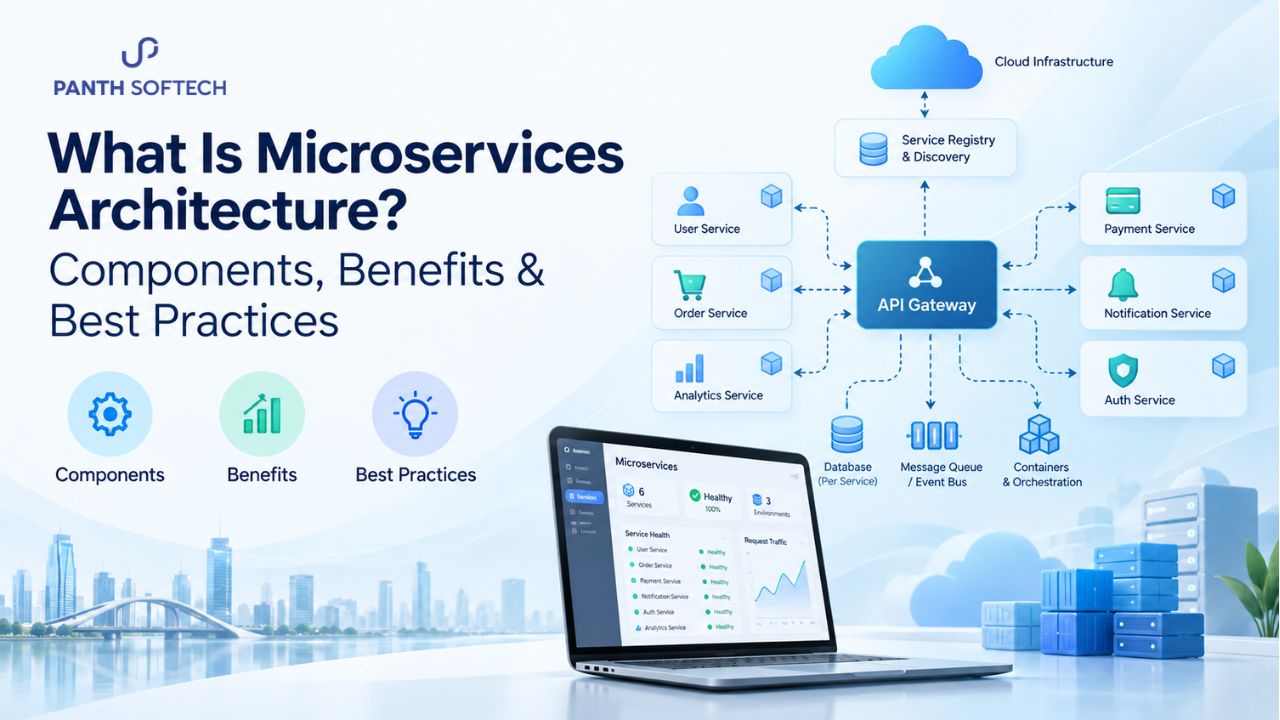
Modular Monolith vs. Microservices
Modular Monolith: A simpler and faster approach for MVPs, with lower development and deployment complexity.
Microservices: Better suited for large-scale fintech platforms, especially when services such as payments, authentication, ledger, notifications, and reporting need to scale independently.
Recommended Approach: Start with a well-structured modular monolith for your MVP, with clear module boundaries. As your user base, traffic, product complexity, and development team grow, you can gradually extract individual services into microservices.
A well-structured modular monolith can therefore provide a practical starting point without preventing future migration to microservices.
Reliable data pipelines and cloud infrastructure also support capabilities such as fraud detection, credit scoring, reporting, and personalization. This is where data engineering and cloud application development can become important parts of a fintech technology strategy.
6. Must-Have Features of a Fintech App
Exact features depend on your product type, target market, and regulatory requirements.
Core Features
- Secure registration and login: Email or phone verification, OTP, MFA, and biometric authentication where appropriate.
- e-KYC onboarding: Document upload, ID scanning, and identity verification.
- Dashboard: A clear view of balances, transactions, bills, accounts, or portfolios.
- Payment integration: Cards, bank transfers, wallets, and relevant local payment methods.
- Real-time notifications: Alerts for transactions, account activity, and suspicious behavior.
- Transaction history and statements: Searchable and downloadable financial records.
- Customer support: In-app chat, chatbot, ticketing, and support workflows.
Advanced Features
- AI-based insights: Spending analysis, risk analysis, and personalized recommendations.
- Fraud detection: Behavioral monitoring, transaction analysis, and risk scoring.
- Multi-currency support: Useful for products serving cross-border users.
- Card and spending controls: Card freezing, transaction limits, and permissions.
- Rewards and gamification: Cashback, referral programs, savings goals, and engagement features.
- Voice and chat assistants: Support simple financial queries and selected account actions.
- Admin panel: Manage users, transactions, disputes, reports, risk alerts, and compliance workflows.
7. Fintech APIs and Integrations
No fintech application works in isolation. It usually depends on a network of financial institutions, payment processors, identity providers, data services, and other technology partners.
Common fintech integrations include:
- Payment gateways and processors: Stripe, PayPal, Razorpay, and other regional providers for accepting or moving payments.
- Bank and account-data APIs: Plaid, Account Aggregator frameworks, and applicable open-banking APIs.
- KYC and identity verification: Services for document verification, identity checks, and onboarding.
- Credit bureaus: Credit checks and risk assessment.
- Notification services: SMS, email, and push notification providers.
- Fraud and risk tools: Rules engines, transaction monitoring, behavioral analysis, and machine-learning-based risk scoring.
Tip: Conduct a vendor assessment before integrating any third-party API. Every external provider can become part of your security, availability, privacy, and compliance surface.
8. Fintech App Security and Compliance
Fintech app security should be built into the architecture, development process, and operations from day one.
Because fintech applications handle financial transactions and sensitive personal information, security should not be treated as a final-stage checklist.
Essential Security Measures
- Encryption: Protect sensitive data at rest and in transit using appropriate encryption and secure transport protocols such as TLS.
- Multi-factorauthentication: Require additional verification for account access and high-risk actions.
- Biometric authentication: Use device-supported biometrics where appropriate.
- Tokenization: Replace sensitive payment information with tokens where applicable.
- Secure API design: Use authentication, authorization, rate limiting, input validation, and appropriate API security controls.
- Fraud detection and monitoring: Combine transaction rules, behavioral analysis, and risk-scoring mechanisms to identify suspicious activity.
- Zero Trust principles: Continuously verify users, devices, services, and access requests rather than relying solely on network location.
- Role-based access control: Restrict sensitive operations based on user roles and permissions.
- Audit logs: Record important administrative, security, and financial actions.
- Secure development and testing: Use code reviews, vulnerability scanning, penetration testing, dependency monitoring, and security testing.
- Mobile app protection: Apply secure local storage and appropriate mobile application protection mechanisms.
Pre-Launch Security Checklist
- Penetration testing completed and critical vulnerabilities addressed
- Sensitive data protected at rest and in transit
- MFA implemented for appropriate high-risk actions
- API rate limiting and input validation implemented
- Logging, monitoring, and alerting configured
- Incident response procedures documented
- Third-party vendors assessed
- Backup and disaster recovery processes tested
- Applicable compliance requirements reviewed
Key Compliance Requirements
- PCI DSS — Payment card data security
- KYC/AML — Customer identity verification and anti-money-laundering controls
- GDPR — Personal-data protection where applicable
- CCPA/CPRA — California privacy requirements where applicable
- GLBA — Financial information privacy requirements in applicable US contexts
- SOC 2 — Controls related to security and data handling, commonly relevant to B2B technology providers
- PSD2/Open Banking — Applicable payment and data-sharing requirements in relevant markets
- India-specific requirements — Applicable RBI, NPCI, and Indian data-protection requirements
Requirements vary based on your country, product, license, business model, data flows, and financial activities. Confirm applicable requirements with a qualified legal or compliance advisor before launch.
9. Fintech App Tech Stack
Your fintech app tech stack affects development speed, security, scalability, and long-term maintenance. There is no single stack that is right for every fintech product, but the following technologies are commonly considered.
| Layer | Common Options | Why It’s Used |
| Mobile | Kotlin, Swift, React Native, Flutter | Native performance or faster cross-platform development |
| Web | React, Angular | Responsive dashboards and web applications |
| Backend | Java, .NET, Node.js, Python | Scalability, security, and mature ecosystems |
| Database | PostgreSQL, MySQL, MongoDB, Redis | Transactions, storage, and caching |
| Cloud | AWS, Azure, Google Cloud | Scalability, availability, and cloud services |
| DevOps | Docker, Kubernetes, Jenkins, GitLab CI/CD | Automated and repeatable deployments |
| AI/ML | Python, TensorFlow, PyTorch | Fraud detection, risk analysis, and personalization |
How to Choose the Right Tech Stack
- Choose Java or .NET when strong typing, mature ecosystems, and long-term enterprise maintainability are important.
- Consider Node.js or Python when rapid development and AI/data integration are key priorities.
- Consider React Native or Flutter when you want to develop for both iOS and Android with a shared codebase.
- Choose native development when your product requires deeper platform-specific capabilities, specialized device integrations, or maximum platform performance.
- Reassess your technology choices after the MVP when real traffic, performance requirements, and feature priorities become clearer.
10. Fintech App Development Cost and Timeline
Fintech app development cost varies widely. It depends on features, compliance requirements, integrations, design depth, platforms, security requirements, and the location and experience of your development team.
Typical Cost Ranges
| Fintech App Type / Level | Estimated Cost | Timeline | Typical Scope |
| Focused MVP | $20,000–$50,000 | 3–5 months | Core features, onboarding, basic transactions |
| Mid-size App | $50,000–$100,000 | 5–8 months | Multiple platforms, APIs, analytics, admin panel |
| Enterprise Platform | $100,000–$250,000+ | 8–12+ months | Advanced security, AI, complex integrations |
These figures are indicative estimates rather than fixed quotes. Actual project costs depend on your exact requirements.
What Affects Fintech App Development Cost?
- Number and complexity of features
- Third-party integrations
- Security and compliance requirements
- Number of platforms
- UI/UX complexity
- Team size and expertise
- Development team location
- Cloud infrastructure
- Testing and security audits
- Ongoing maintenance and third-party service fees
Practical Ways to Control Development Costs
- Launch a focused MVP instead of building a complete platform immediately.
- Use established third-party services for non-core functionality such as KYC or notifications where appropriate.
- Use cross-platform development when it meets your product requirements.
- Start with a modular monolith and introduce microservices as the product scales.
- Work with a team that has relevant fintech experience to reduce avoidable rework.
- Consider dedicated or offshore development models when they fit your security, communication, and delivery requirements.
Remember to budget for the long term. Cloud hosting, maintenance, security audits, monitoring, third-party services, and compliance updates continue after launch.
11. Fintech App Monetization Models
Choose your revenue model early because it can influence your features, architecture, and transaction flows.
- Transaction fees: Charge a fee for payments, transfers, or other financial transactions.
- Subscriptions: Offer monthly or annual plans for premium functionality.
- Interest and lending margins: Generate revenue through applicable lending or financial products.
- Freemium: Provide core functionality for free and charge for premium features.
- Partnerships and referrals: Earn commissions from relevant financial service partners.
- Interchange and card fees: Generate revenue from applicable card-related activity.
12. Fintech App Development Challenges
Building a fintech product involves challenges beyond normal software development.
Regulatory Complexity
Licensing, KYC, AML, privacy, payment, and reporting requirements can vary by jurisdiction and business model.
Fraud and Financial Crime
Fintech platforms need mechanisms to identify suspicious transactions, account takeover attempts, synthetic identities, and other forms of financial abuse.
Data Privacy
Applications often process sensitive financial and personal data, making access control, encryption, retention, and data governance important considerations.
Third-Party Dependencies
Payment processors, KYC providers, banking APIs, and other external services can affect your application’s availability and functionality.
Transaction Reliability
Financial transactions require careful handling of failures, retries, reconciliation, idempotency, and auditability.
Scalability
Transaction volumes can increase rapidly. The architecture needs to handle traffic spikes without compromising transaction processing or security.
Continuous Compliance
Regulatory requirements, security threats, financial products, and market expectations change over time. Post-launch monitoring and updates are therefore essential.
13. Trends to Watch in 2026
- AI-driven personalization and fraud prevention for customer insights and risk monitoring
- Embedded finance, where financial services are integrated into non-financial platforms
- Open banking and API ecosystems that enable controlled financial data sharing
- Advanced biometrics and continuous authentication to strengthen account security
- Real-time payments becoming increasingly important for digital financial experiences
- Voice-enabled and conversational banking for selected everyday financial tasks
- Process automation for activities such as KYC workflows, reporting, and customer support
- Green fintech and ESG tracking for sustainability-related financial insights
14. Common Mistakes to Avoid
- Treating security and compliance as a final step: Build them into the product from the beginning.
- Building too many features into the MVP: Start with the core problem and validate it with real users.
- Ignoring onboarding: Complex registration and KYC workflows can create unnecessary friction.
- Choosing technology because it is trendy: Match the stack to your security, scalability, product, and team requirements.
- Skipping load testing: Financial applications need to be tested against expected and peak traffic.
- Weak vendor assessment: Every external provider can introduce security, availability, privacy, or compliance considerations.
- No post-launch plan: Fintech products require ongoing monitoring, maintenance, security improvements, and regulatory updates.
15. How to Choose a Fintech App Development Company
Choosing a fintech app development company is not only about comparing hourly rates. Look for a partner with relevant experience in financial applications, secure integrations, cloud infrastructure, compliance-aware development, and post-launch support.
When evaluating a development partner, check for:
- Relevant experience with payments, lending, banking, investment, or other financial platforms
- Security-first development practices
- Experience with secure API integrations
- Full-stack capabilities across mobile, backend, cloud, data, and AI
- A clear development process with regular demos and communication
- Scalability planning
- Transparent pricing and engagement models
- Post-launch support and maintenance
- Verified client reviews and relevant case studies
Questions to Ask a Fintech Development Company
- Can you show similar fintech projects or case studies?
- How do you handle data protection and access control?
- What is your security testing process before launch?
- How do you approach third-party API and vendor risk?
- Who owns the source code and infrastructure?
- How do you handle scalability and performance testing?
- What does post-launch support include?
Build Your Fintech Product with Panth Softech
Panth Softech is a software development company with 11+ years of experience and offices in India and the USA. Our team combines custom software, cloud, data engineering, and AI/ML expertise to support the development of secure and scalable digital products.
Here is how we can help:
- MVP and product development for startups through our startup services
- Web and mobile applications through mobile app development and web application development
- Cloud-native architecture through cloud application development
- Data pipelines, analytics, and dashboards through data engineering and BI services
- AI-powered features such as fraud detection and personalization through AI/ML services
- Flexible development teams through Offshore Development Center services or dedicated developers
Have a fintech idea? Talk to our experts for a free consultation and get a clear roadmap, timeline, and estimate for your project.
Conclusion
Successful fintech app development comes down to a few fundamentals: a focused product idea, a secure and compliant foundation, a scalable architecture, the right technology stack, and a development partner who understands both software and financial technology.
Start with a focused MVP, protect user data from day one, validate your product with real users, and keep improving after launch.
Done well, a fintech app can do more than move money. It can create a reliable digital experience that users are comfortable trusting with their financial activity.
Frequently Asked Questions
- What is fintech app development?
Fintech app development is the process of designing, building, testing, and launching software that provides financial services such as payments, lending, banking, investing, insurance, or personal finance through mobile or web platforms.
- How much does fintech app development cost?
Fintech app development can cost approximately $20,000–$225,000+, depending on the application’s features, platforms, integrations, security requirements, compliance needs, and development team. A focused MVP may fall toward the lower end, while complex banking, trading, lending, or payment platforms can cost significantly more.
- How long does it take to build a fintech app?
A focused MVP may take around 3–5 months, a mid-size application around 5–8 months, and a complex enterprise platform 8–12 months or more. The timeline depends on product scope, integrations, compliance requirements, testing, and team size.
- How do I build a fintech app from scratch?
Research your target market, identify applicable regulations, define your MVP, design the UI/UX, choose the architecture and tech stack, develop and integrate the required services, test for security and performance, launch to a controlled group, and improve the product based on user and operational data.
- What is the best tech stack for a fintech app?
There is no single best technology stack for every fintech product. Common choices include Java, .NET, Node.js, or Python for the backend; React Native or Flutter for cross-platform mobile development; Kotlin or Swift for native apps; PostgreSQL or other suitable databases; and AWS, Azure, or Google Cloud for infrastructure.
- How do you secure a fintech app?
Use appropriate encryption, multi-factor authentication, secure APIs, tokenization where applicable, fraud monitoring, role-based access control, audit logging, secure coding practices, vulnerability testing, penetration testing, and appropriate compliance controls.
- Which compliance standards apply to fintech apps?
Requirements depend on the product, market, license, and business model. Common requirements and standards can include PCI DSS, KYC/AML controls, GDPR, CCPA/CPRA, GLBA, SOC 2, PSD2/Open Banking requirements, and applicable RBI, NPCI, and Indian data-protection requirements.
- Why should I hire a fintech app development company?
An experienced fintech app development company can bring expertise in financial workflows, secure development, API integrations, cloud infrastructure, testing, and compliance-aware engineering. The right partner can also help plan architecture, development stages, and post-launch support.
- Should I build a native or cross-platform fintech app?
Cross-platform frameworks such as React Native and Flutter can reduce development time when you need to launch on both iOS and Android. Native development with Swift or Kotlin may be preferable when your product requires deeper device-level capabilities, specialized security controls, or maximum platform-specific performance.