Panth Softech Team
In the modern business world, technology drives growth, innovation, and customer satisfaction. Every company – from startups to large enterprises – depends on software solutions to improve operations, manage data, and serve customers effectively. However, not all software is created equal. While off-the-shelf solutions may work for some, many businesses quickly realize they need something more specific to their goals and challenges.
That’s where custom software development becomes essential. It provides a personalized, scalable, and efficient approach to software creation, ensuring your technology fits your business – not the other way around.
As a leading custom software development company, Panth Softech helps businesses across industries design and build powerful software solutions that are tailored to their unique needs. Whether you want to streamline internal operations, enhance customer experiences, or integrate smart technologies like IoT, our expert team can make it happen.
What Is Custom Software Development?
Custom software development is the process of designing and building software applications specifically created for a particular organization or user group. Unlike ready-made software, which is built for a general audience, custom software is tailored to your business’s exact requirements.
For example:
- A logistics company may need a custom fleet tracking platform.
- A hospital might require a secure patient management system.
- A retail brand could benefit from a personalized eCommerce solution.
With custom software, your business gets full control over how the system functions, looks, and scales over time. You don’t have to adjust your workflow to fit generic tools – instead, the software adjusts to you.
At Panth Softech, we deliver custom software development services that help businesses increase efficiency, reduce costs, and gain a competitive edge. Our approach focuses on building solutions that are fast, reliable, and aligned with your long-term vision.
How Does Custom Software Work?
A typical custom application can include:
- Business process automation
- Custom dashboards and reports
- User and role management
- API and third-party integrations
- Mobile or web applications
- Data management and analytics
- Industry-specific workflows
- Cloud-based infrastructure
The key advantage is flexibility. As your business changes, the software can evolve with it.
Custom Software vs. Off-the-Shelf Software
Off-the-shelf software is built for a broad market. It usually offers standard features that work for many companies.
Custom software, on the other hand, is designed around a specific organization’s processes.
| Factor | Custom Software | Off-the-Shelf Software |
| Features | Built around business needs | General-purpose |
| Scalability | Highly flexible | Depends on the provider |
| Integrations | Can be designed specifically | Limited to available options |
| User experience | Fully customizable | Standardized |
| Control | Greater control over functionality and data | Provider-dependent |
| Initial cost | Usually higher | Usually lower |
| Long-term flexibility | High | Can become restrictive |
Off-the-shelf software is not automatically a bad choice. It can work well when your requirements are simple and closely match the product.
However, customization becomes more valuable when your workflows are complex, your systems need integration, or your business has unique operational requirements.
Types of Custom Software Solutions
Custom software can take many forms depending on the business problem.
Common custom software solutions include:
- Enterprise software: Connects departments, processes, and business data.
- CRM solutions: Manage leads, customers, sales activities, and relationships.
- ERP solutions: Bring finance, inventory, procurement, and operations into one system.
- HR software: Handles employee records, attendance, recruitment, leave, and workflows.
- Inventory software: Provides better control over stock, orders, and warehouses.
- Logistics platforms: Support fleet management, shipment tracking, and route planning.
- Custom web and mobile applications: Deliver customer-facing or employee-facing digital experiences.
The right solution depends less on the technology itself and more on the business problem it needs to solve.
Custom Software Applications Across Industries
One major advantage of tailored software is its ability to support industry-specific processes.
FMCG Software Solutions
FMCG businesses often manage large product volumes, distributors, sales teams, and fast-moving inventory.
Custom FMCG Software Solutions can support:
- Order management
- Distributor management
- Inventory tracking
- Sales-force automation
- Real-time business reporting
HR Software Solutions
HR teams can reduce administrative work with software designed around their employee lifecycle.
HR Solutions may include recruitment management, attendance, leave management, employee records, payroll integrations, and performance tracking.
Agriculture Software Solutions
Agriculture businesses can use custom applications for farm operations, crop monitoring, inventory, supply-chain management, and data-driven planning.
The software can also connect field data with management dashboards, giving decision-makers better visibility.
Manufacturing Software Solutions
Manufacturers often have complex production and quality workflows.
Custom manufacturing software can connect production planning, inventory, procurement, quality control, machine data, and reporting.
Logistics Software Solutions
Logistics companies need visibility across multiple moving parts. A custom platform can combine fleet management, shipment tracking, warehouse operations, route optimization, and customer communication.
Hospitality Software Solutions
Hotels and hospitality businesses can use tailored software for reservations, guest management, staff operations, billing, customer engagement, and reporting.
How Can Custom Software Improve Business Efficiency?
The strongest business case for custom software is not simply having a new application. It is improving how work gets done.
Sales and Marketing
A custom CRM can bring leads, customer records, sales activity, and reporting into one workflow.
Instead of moving data between spreadsheets and separate applications, sales teams can work from a centralized system.
Finance and Accounting
Automated workflows can reduce repetitive data entry and improve reporting accuracy.
Custom integrations can also connect financial processes with orders, inventory, payments, or other business systems.
Human Resources
HR teams can automate routine tasks such as employee onboarding, attendance tracking, leave approvals, and document management.
This frees employees to focus on work that requires human judgment.
Operations
Operations teams benefit when information moves automatically between departments.
For example, an order placed by a customer could automatically trigger inventory updates, warehouse tasks, delivery processes, and management reporting.
Management
Executives need accurate information to make timely decisions.
Custom dashboards can combine data from different departments and provide real-time visibility into sales, operations, inventory, or other key business metrics.
Key Benefits of Custom Software Development
The benefits go beyond having software designed specifically for your company.
1. Better Operational Efficiency
Automation reduces repetitive manual work and helps teams follow consistent workflows.
2. Greater Scalability
A scalable software architecture can accommodate new users, locations, products, integrations, and business processes as the company grows.
3. Easier System Integration
Custom applications can connect with existing ERP, CRM, payment gateways, APIs, cloud platforms, and other business tools.
4. Improved Data Control
Businesses can define user permissions, access levels, data flows, and security requirements according to their needs.
5. Better User Experience
When software reflects actual employee workflows, users spend less time adapting their work to the technology.
6. Long-Term Business Value
The initial investment may be higher than buying a standard application. However, businesses can gain value through automation, productivity improvements, reduced system limitations, and better decision-making.
When Does Your Business Need Custom Software?
Not every business needs a bespoke application. But certain warning signs make the case much stronger.
Consider custom software if:
- Your teams depend heavily on spreadsheets and manual processes.
- Multiple systems do not communicate with each other.
- Existing software lacks important features.
- Your business has unique industry workflows.
- Your current platform cannot scale with growth.
- Employees spend significant time entering the same data repeatedly.
- You need specialized reporting or dashboards.
- Existing software requires expensive workarounds.
- You need greater control over your data and integrations.
A useful rule is simple: if your business repeatedly changes its processes to fit the software, rather than the software supporting the processes, it may be time to consider a custom solution.
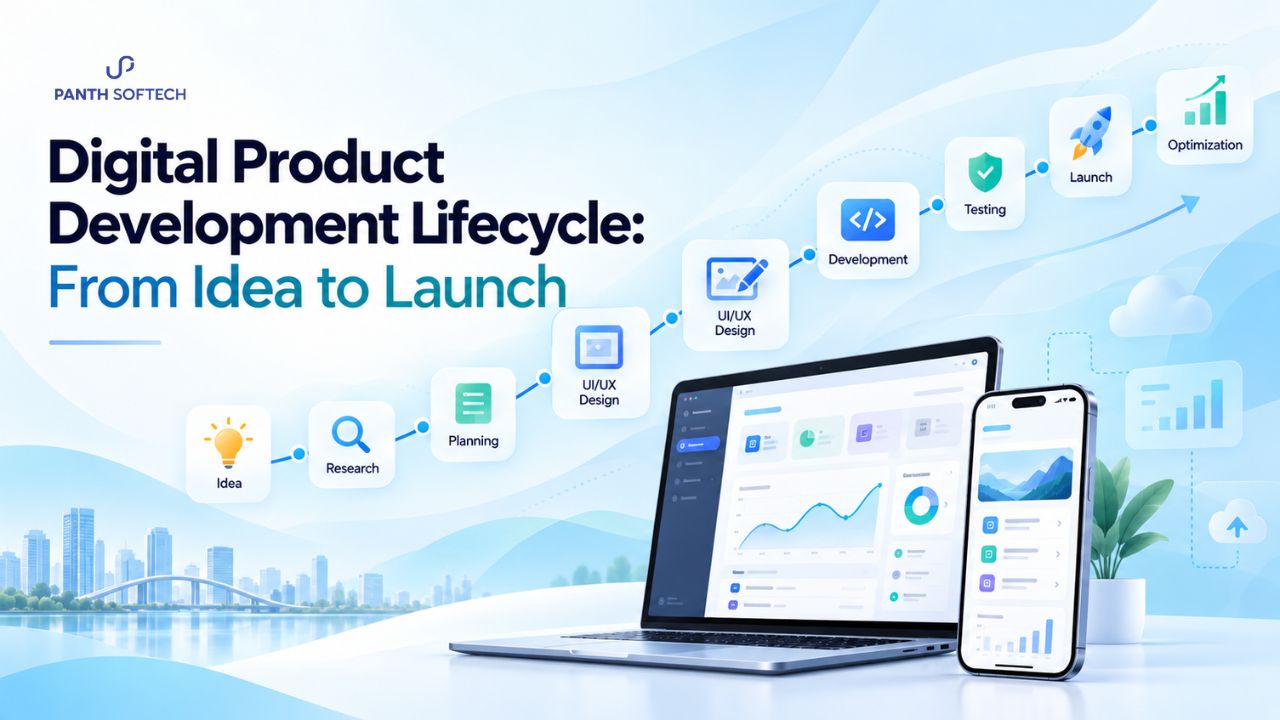
What Is the Custom Software Development Process?
A successful project needs more than good coding. It needs a structured development process.
- Requirement analysis: The development team studies business goals, workflows, users, and technical requirements.
- Planning and architecture: Developers define the technology stack, system architecture, database structure, and integrations.
- UI/UX design: Designers create interfaces and user journeys that make the application easy to use.
- Development: Frontend, backend, database, and API components are built according to the approved specifications.
- Testing: Quality assurance teams test functionality, performance, security, integrations, and usability.
- Deployment: The software moves into production, with data migration and user onboarding where required.
- Maintenance: Developers provide updates, security improvements, bug fixes, performance optimization, and new features.
Following this lifecycle helps businesses control scope while creating software that can support future requirements.
Best Practices for Custom Software Development
A few practical choices can make a major difference to project outcomes.
- Define business objectives before discussing features.
- Prioritize the most valuable functions first.
- Involve actual users during design and testing.
- Plan integrations early.
- Build security into the architecture.
- Design for scalability rather than immediate needs alone.
- Test continuously throughout development.
- Keep communication and project milestones clear.
- Plan maintenance and support before launch.
An experienced custom software development company should also challenge unnecessary requirements instead of simply building every requested feature. Good development is about solving the right problem, not creating the largest possible application.
Why Choose Panth Softech for Custom Software Development?
Choosing the right technology partner is as important as choosing the right technology.
Panth Softech can be positioned around a business-first approach to custom software development, where the solution begins with understanding operational requirements and ends with a scalable application.
For businesses across FMCG, HR, agriculture, manufacturing, logistics, and hospitality, the focus should be on creating software that supports real workflows rather than adding another disconnected tool.
A strong development partnership should cover the complete journey—from requirements and UI/UX design to development, testing, deployment, integrations, and ongoing support.
Before selecting a partner, evaluate its relevant industry experience, technical capabilities, portfolio, communication process, security practices, and post-launch support.
Turn Your Business Needs Into Better Software
Still relying on disconnected tools or manual processes? Panth Softech can help you develop custom software that automates workflows, connects your systems, and supports long-term growth.
Talk to our experts and explore the right custom software solution for your business.